
Last updated November 15, 2026
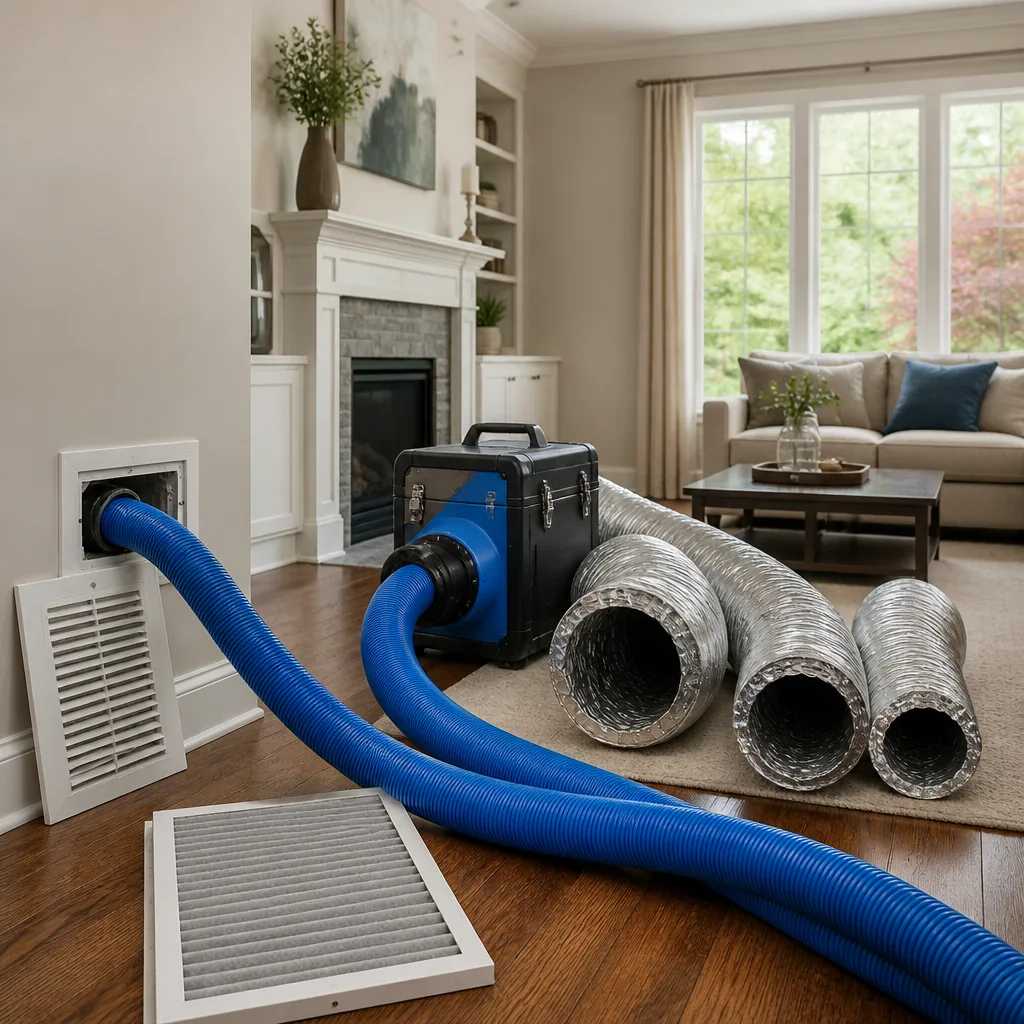 Whole-home duct cleaning
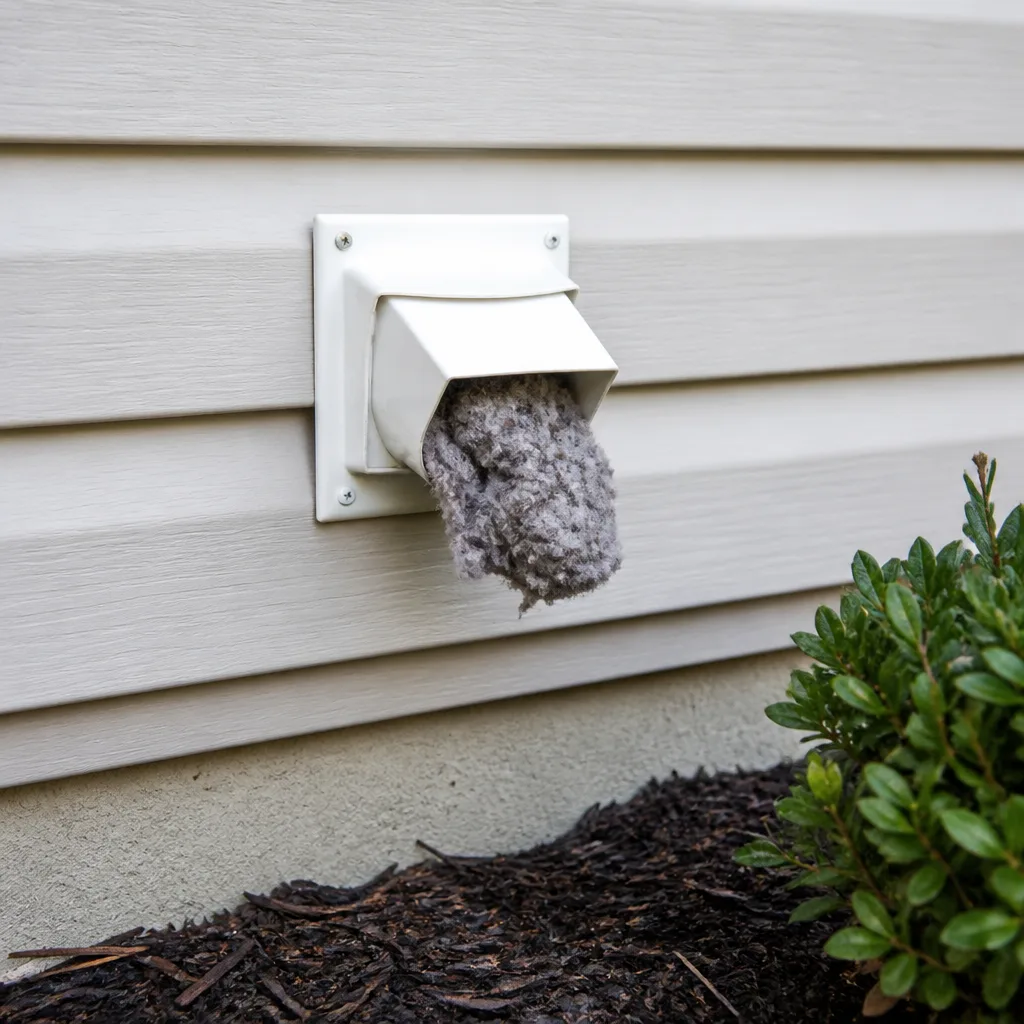 Dryer vent cleaning
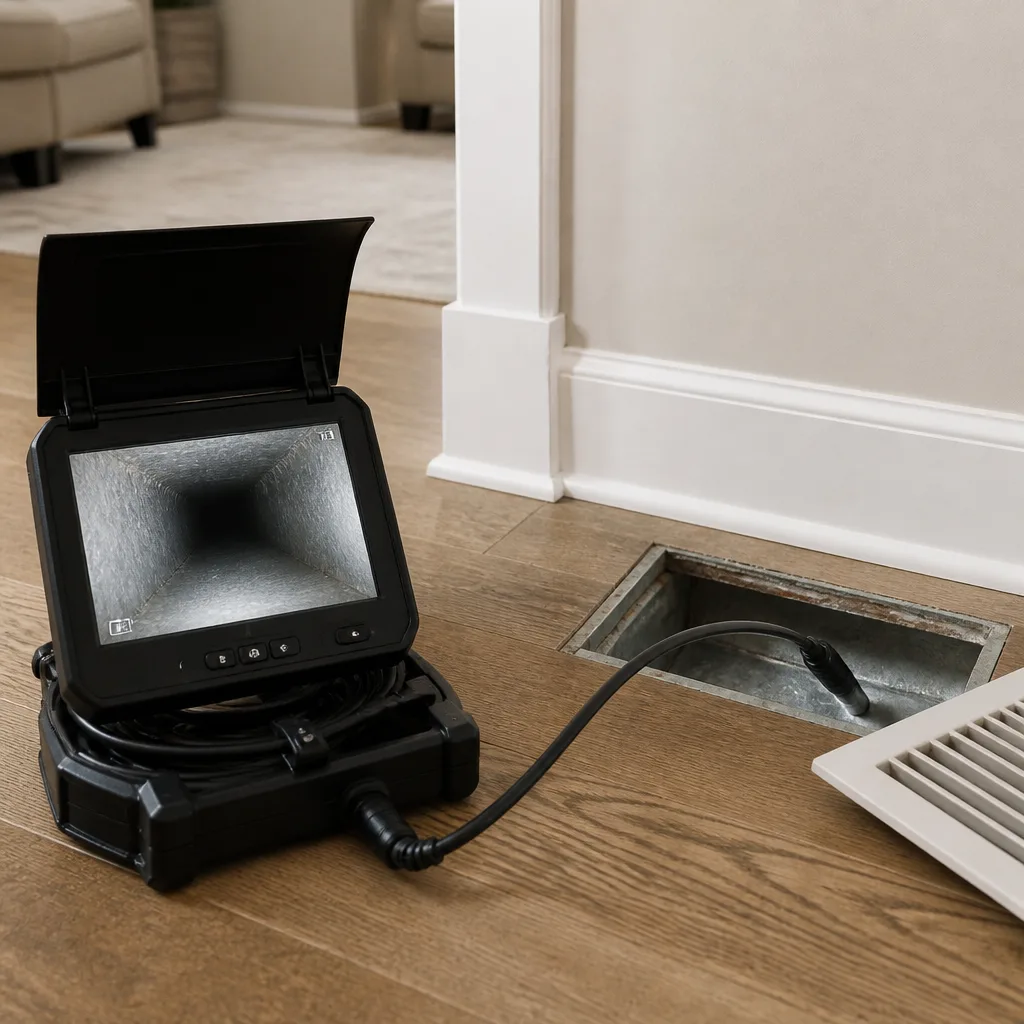 Camera inspection
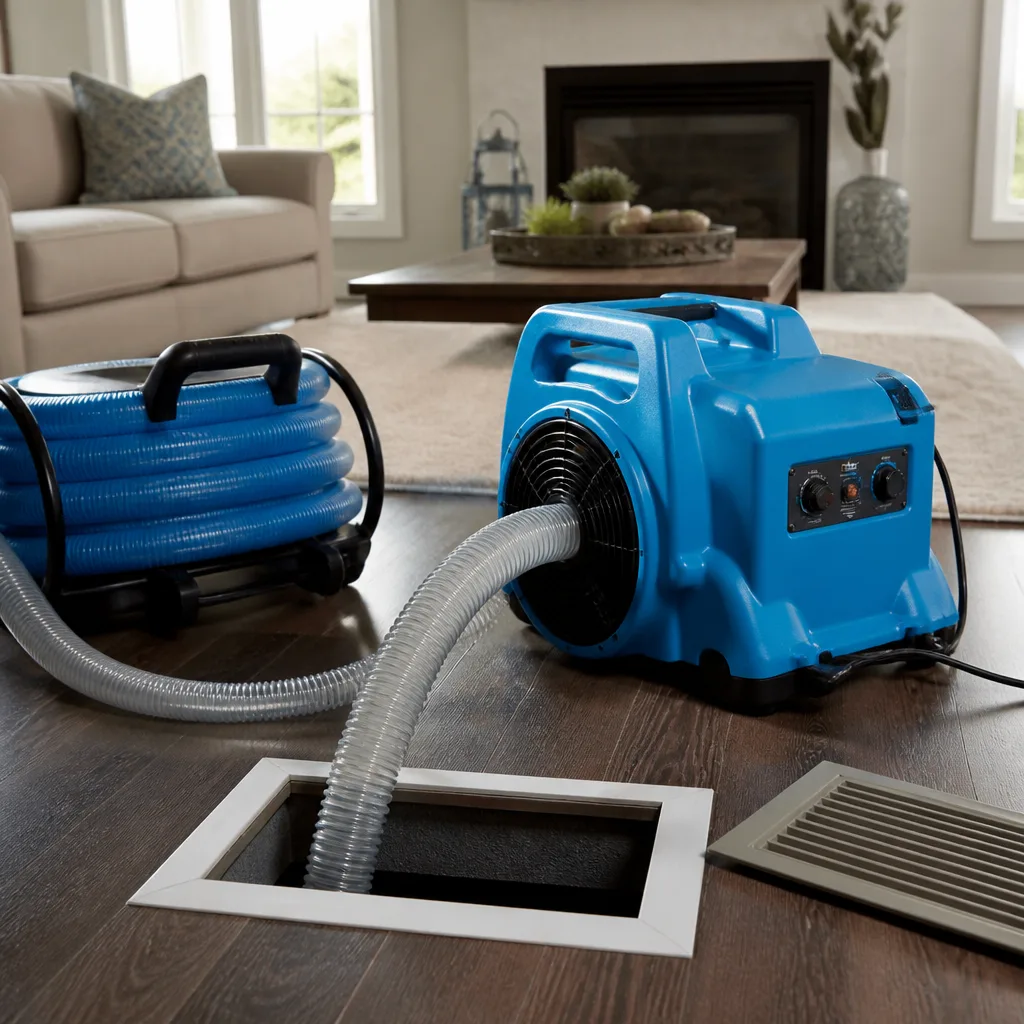 Sanitizing & deodorizing
Whole-system duct and dryer vent check with before-and-after photos - you see exactly what came out of your vents
That "$99 whole-house special" is a bait ad - the real number appears once they are in your hallway, or the "clean" is a shop-vac at the register. We photograph the inside of your ducts before and after instead.
DIY vs Professional Air Duct Cleaning: The Antioch Homeowner’s Decision Guide
Here’s the part most duct cleaning articles skip: DIY duct cleaning isn’t dangerous. It’s just structurally limited. A homeowner with a shop vac and a dryer vent brush can genuinely clean the first foot or so of accessible register openings, and on a dryer duct that’s often all there is to clean. But that same kit aimed at an HVAC supply trunk will loosen debris and push it deeper into the system unless you’re running negative pressure from the air handler end at the same time. That’s the dividing line this guide maps out for you – where DIY honestly ends and where professional equipment has to start. You’ll learn which Antioch jobs you can handle yourself, which ones need a machine pulling serious CFM, and how to run the cost math before you spend a weekend on a ladder.
Quick Answer
For most Antioch homeowners, DIY is genuinely appropriate for register and return-grille cleaning and for clearing a dryer vent with a brush kit. It is not appropriate for cleaning supply or return trunk lines, because effective duct cleaning depends on source removal under negative pressure – a machine moving thousands of CFM at the air handler while agitation happens at the far end. A household vacuum can’t generate that. Our technicians have up to 8 years of experience, and the reliable rule is simple: clean what you can see, and hire out the interior of the system.
Styles & brands we work with
- Whole-home duct cleaning
- Dryer vent cleaning
- Camera inspection
- Sanitizing & deodorizing
Table of Contents
- What DIY duct cleaning actually covers
- Why negative pressure is the whole ballgame
- Which Antioch homes are fine with DIY, and which aren’t
- Tools a serious DIYer could buy, and their real limits
- Running the cost math on an Antioch house
- A numbered checklist for the DIY pass
- Common mistakes to avoid
- When to call a professional
What DIY Duct Cleaning Actually Covers
DIY duct cleaning reaches the surface. That sounds like a knock, but it’s not – surface cleaning is real work and it matters. Here’s what a homeowner can legitimately accomplish with a few basic tools and a free afternoon.
- Register and grille cleaning. Removing supply and return grilles and washing them in a utility sink is straightforward. So is vacuuming the boot – the short metal section behind the grille – with a brush attachment.
- Return filter rack inspection. Pull the filter, look at the rack for dust bypass, check that the filter is seated flat and the correct size, and confirm airflow direction is right. This is one of the highest-value five minutes in home maintenance.
- Dryer vent cleaning. A dryer vent brush kit with flexible rods genuinely cleans the run between the dryer and the exterior hood, provided the run is short and has few elbows. This is the one duct in the house where consumer tools are close to adequate.
- Visual boot and plenum inspection. With a flashlight and a phone camera, you can see into the accessible boots and spot obvious problems: disconnected joints, crushed flex, moisture staining, pest evidence.
Now here’s the ceiling. A typical residential system in Antioch includes a supply trunk, branch runs, boot boxes, and a return plenum running back to the air handler. Whether it’s a single-story ranch in the older grid streets or a two-story build in a newer subdivision, the run lengths and elbow counts are substantial. Cleaning the interior of that network requires agitation at the far end and simultaneous extraction at the near end. A shop vac moves maybe 150 to 250 CFM at the hose. That is an order of magnitude below what real source removal requires. So DIY covers the first twelve inches of an accessible register opening and leaves the remaining run untouched.
We don’t say that to sell anything. We say it because a lot of homeowners put real effort into a DIY job and walk away assuming the whole system is clean, then can’t figure out why dust returns to the furniture in two weeks. For a deeper walkthrough of what a full system clean actually involves, the air duct cleaning page breaks down the process step by step.
Why Negative Pressure Is the Whole Ballgame
Effective duct cleaning depends on a machine pulling roughly 4,000 to 6,000 CFM at the air handler while an agitation tool – a brush head, an air whip, or a reverse air nozzle – travels the length of each run. That’s the source removal principle: loosen the debris where it sits, and move it to a capture point before it settles back onto the duct wall.
Without negative pressure, you get displacement, not removal. Imagine brushing dust off a bookshelf with a hair dryer blowing. You haven’t cleaned the shelf; you’ve relocated the dust to the books. A shop vac at a single register does the same thing to a duct system – the light stuff lifts and drifts deeper into the run, where it can settle around a joint, coat the evaporator coil, or blow back into the nearest room through the register next in line.
Here’s what the professional sequence looks like, in order:
- Containment and capture. A high-volume extraction unit connects to the main trunk, and the system goes under continuous negative pressure for the entire cleaning. Nothing travels back into the living space.
- Agitation, one run at a time. Each supply and return gets brushed or air-whipped at the far end, often through a register hole or an access cut, while the extractor pulls toward the capture point.
- Layered filtration. Equipment like Abatement Technologies negative-air units and HEPA filtration capture fine particulate close to the source, so what comes loose doesn’t end up as a fine haze settling on the furniture overnight.
- Documentation. Before-and-after photos of the interior of the ducts – the customer’s ducts, not stock images.
That sequence depends on equipment a homeowner can’t reasonably buy. The trade-off, though, is that it’s also one of the most misrepresented parts of the trade. The cheap coupon-and-upsell model is why so many people distrust duct cleaning. The honest version sets one flat price per system, agreed before any work begins – no per-vent billing, no surprise add-ons once the technician is in the attic.
Which Antioch Homes Are Fine With DIY, and Which Aren’t
Antioch’s housing stock is genuinely mixed, and that changes the calculation. A newer home in a subdivision off Lone Tree Way or over near the Highway 4 corridor probably has duct systems installed within the last decade or two, closer to code for sealing and insulation, and often with a modern MERV filter already in place. A home in the older core of Antioch has typically seen at least one HVAC replacement over the years, and mixed duct materials – some flex, some sheet metal, some original runs spliced into newer ones – are common. Mixed material transitions are where leaks and accumulation tend to concentrate.
DIY is usually enough when:
- Your home is newer and you have no reason to suspect contamination.
- You’ve had professional cleaning within the last few years and are doing routine grille work in between.
- You just want to clean the register covers, confirm the filter is right, and clear the dryer vent.
- Your HVAC is running normally – even airflow, no persistent musty smell when the system kicks on.
Professional work is necessary when:
- Post-renovation. Drywall dust and construction particulates are fine and aggressive; they coat surfaces and settle throughout the system. Antioch’s dry summers and the dust from surrounding construction areas make this worse during remodel season.
- A smoke event. Whether from a kitchen fire or a structure fire, smoke residue is an oily deposit that requires agitation and filtration-grade extraction, not vacuuming.
- Rodent intrusion. In many Antioch neighborhoods, especially at the edges of town near open ground, rodents find their way into attic duct runs. Droppings and nesting material need proper handling, and often duct repair afterward – crushed flex, chewed connections, or punctured sections.
- A significant allergy or asthma concern in the household. If indoor air quality is the whole point, start with a proper baseline clean.
- A dryer vent that’s never been cleared. A clogged dryer vent is a fire risk, plain and simple. If the run is long, has multiple 90-degree elbows, or can’t be accessed from both ends, a professional pass is the safer call.
If your home falls into the second group, the duct cleaning Antioch overview is a good starting point for understanding what a professional visit involves.
Tools a Serious DIYer Could Buy, and Their Real Limits
Handheld duct cleaning tools exist and some of them are decent. If you’re inclined to buy in, it’s better to know exactly what you’re getting than to assume a branded setup makes you equivalent to a full professional job.
The best-known entry point is a Rotobrush-style handheld rotating brush system designed to clean residential branches. These units combine a flexible shaft with interchangeable brush heads and a small HEPA vacuum canister. They genuinely work on short branch runs and on dryer vents. They’re also useful for cleaning the interior of a return drop you can access safely. Honest limits: they’re sized for one run at a time, the vacuum captures a fraction of what a truck-mount or high-CFM portable unit captures, and they can’t run simultaneous negative pressure on the trunk while you agitate a distant run. Without that simultaneous pull, loosened debris is a coin toss on where it lands.
What professional setups add is a layered process, not a bigger vacuum. The systems we use – Rotobrush for agitation, Nikro for HEPA-grade extraction, Abatement Technologies for negative-air filtration during the job – each cover a stage. Remove any one and the process has a hole. Rotobrush alone without the extraction layer is closer to DIY. Nikro alone without agitation leaves stuck debris on the walls. The equipment brand names matter less than what they collectively allow: source removal under pressure, documented before and after.
Post-cleaning air quality upgrades are a separate question worth flagging. If the reason you’re cleaning is that allergies persist, filtration is the next conversation – the kind of thing that gets sorted with Honeywell and Aprilaire filtration components, chosen for the specific system. That’s a whole-system question, not something a handheld unit solves.
Running the Cost Math on an Antioch House
Let’s be concrete, because this is the decision most homeowners are actually making. The DIY cost is easy to underestimate, and the professional cost is easy to overestimate.
Here’s a realistic estimate of what a serious DIY kit covers and what it leaves out.
| Approach | Typical cost | What it cleans | What it misses |
|---|---|---|---|
| Basic DIY – shop vac, dryer brush kit, grille removal | $50 to $150 | Registers, boots, dryer vent, filter rack | Supply and return trunks, branch interiors, coil-adjacent duct |
| Mid-tier DIY – Rotobrush-style handheld unit | $400 to $800 | Accessible branch runs, dryer vent, some return drops | Simultaneous negative pressure, trunk-wide source removal, filtration-grade capture |
| Professional whole-system clean (typical Antioch residential range) | $350 to $700 for a duct system; dryer vent typically $100 to $175 | Full supply and return network, agitation and extraction together, documented before and after | Nothing in the duct network |
| Professional clean plus minor repair | Adds to the above depending on the repair | Everything above plus crushed flex, disconnected joints, chewed connections | Nothing in the duct network |
The math that actually breaks the tie is this: if you’re buying a $500 handheld unit, using it once, and still needing a professional job to reach the trunks, you’ve spent more than the professional job alone. The DIY setup makes sense if you’re committed to routine annual grille work and dryer vent clearing for years – that’s when the upfront spend pays off. If it’s a one-time clean on a house that’s already showing signs of contamination, the professional quote is the better buy.
Ranges above are estimates only, based on typical Antioch market pricing and system sizes. The written estimate sets the final price, every time. If you want an exact number, call (877) 212-3243 for a free estimate – we answer 24/7 and dispatch from 7am to 7pm. You can also review our dryer vent cleaning page if the dryer vent is what’s driving your interest.
A Numbered Checklist for the DIY Pass
If you’re going to do the reachable parts yourself, do them in the right order. This is the sequence our technicians follow on the homeowner-side portion of a job.
- Kill the system. Shut off the HVAC at the thermostat so you don’t run the blower while you’re working around registers.
- Photograph before you touch. Take a picture of each grille in place. It saves ten minutes of figuring out which grille went where later, especially in rooms with two or three registers.
- Pull and wash the grilles. Warm water and dish soap. Let them dry fully before reinstalling – moisture plus grime creates streaks on the ceiling.
- Vacuum the boot. Brush attachment, low suction. Reach as far back as the tool will go without forcing it. If you hit a bend or a flex transition, stop; forcing the tool risks tearing the duct liner.
- Inspect the filter rack. Correct size, straight, seated fully. Check the arrow direction matches airflow. A filter that’s bypassing at the edges is letting dust right past it.
- Clean the dryer vent if it’s short and accessible. Disconnect the dryer, feed the brush rod through from the exterior hood if possible rather than from the dryer side. Rotate, pull, repeat.
- Look for warning signs. Water staining, crushed duct sections, chewed material, disconnected joints, excessive dust on the coil face. Snap a photo of anything suspicious and get it checked.
- Restore and test. Reinstall grilles, reconnect the dryer, restart the system, and walk the house checking airflow at each register.
That checklist covers everything a homeowner can safely reach. It does not touch the interiors of the trunks, and it shouldn’t – those require access cuts, proper containment, and equipment that pulls the whole length of the run.
See the difference
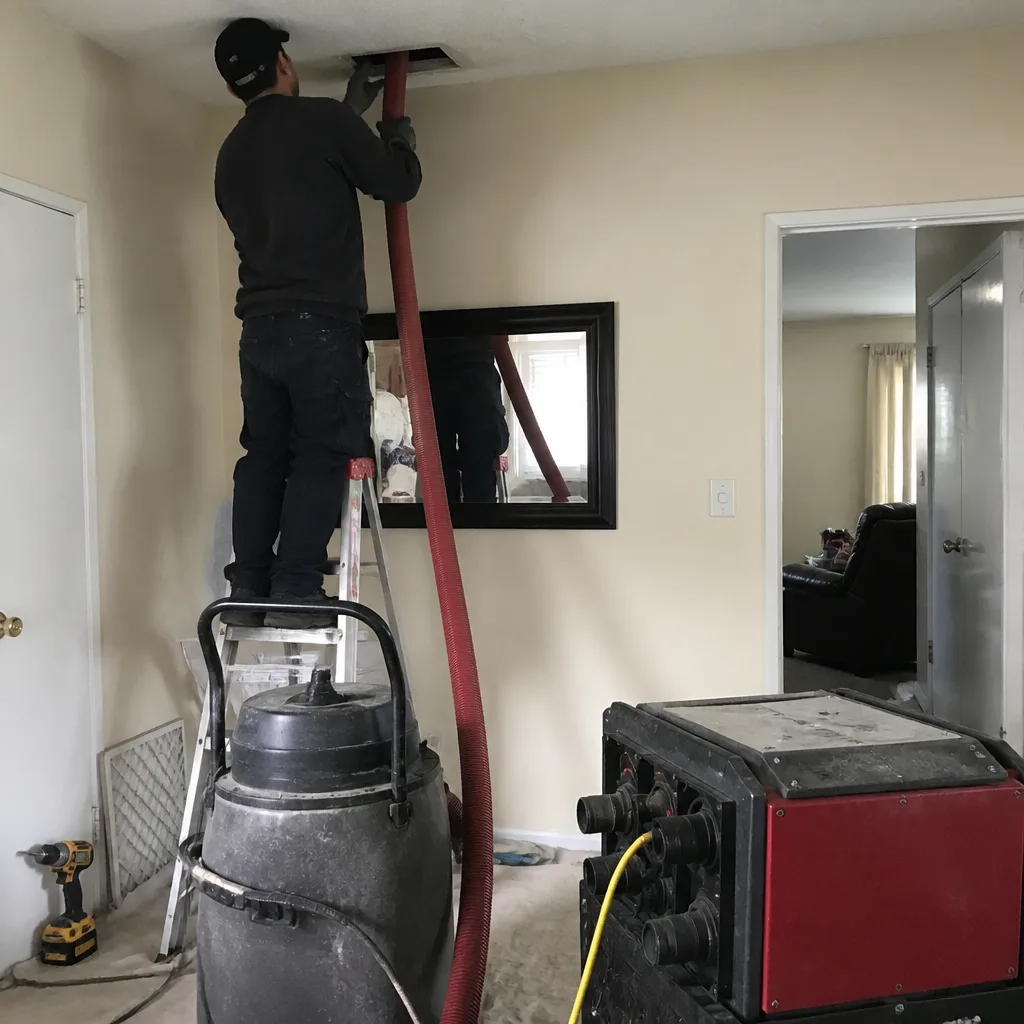 Before
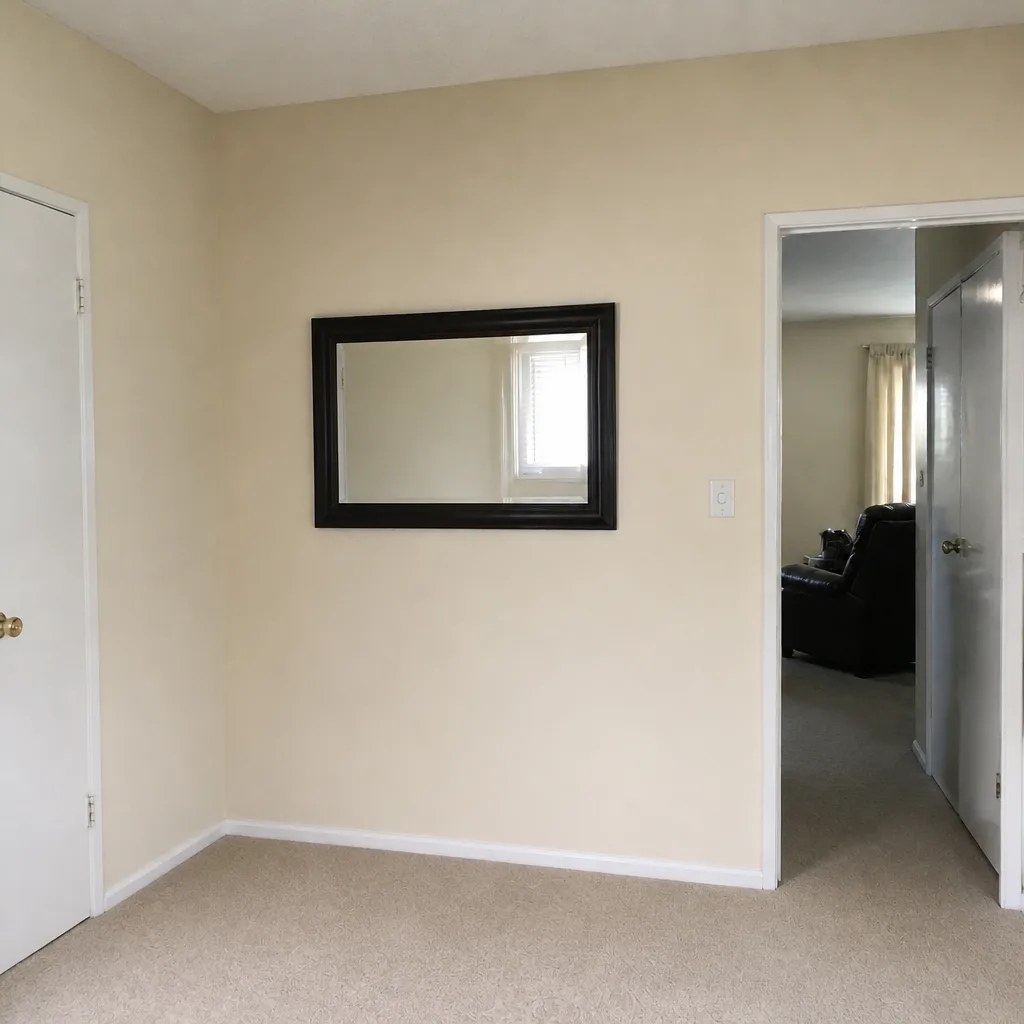 After
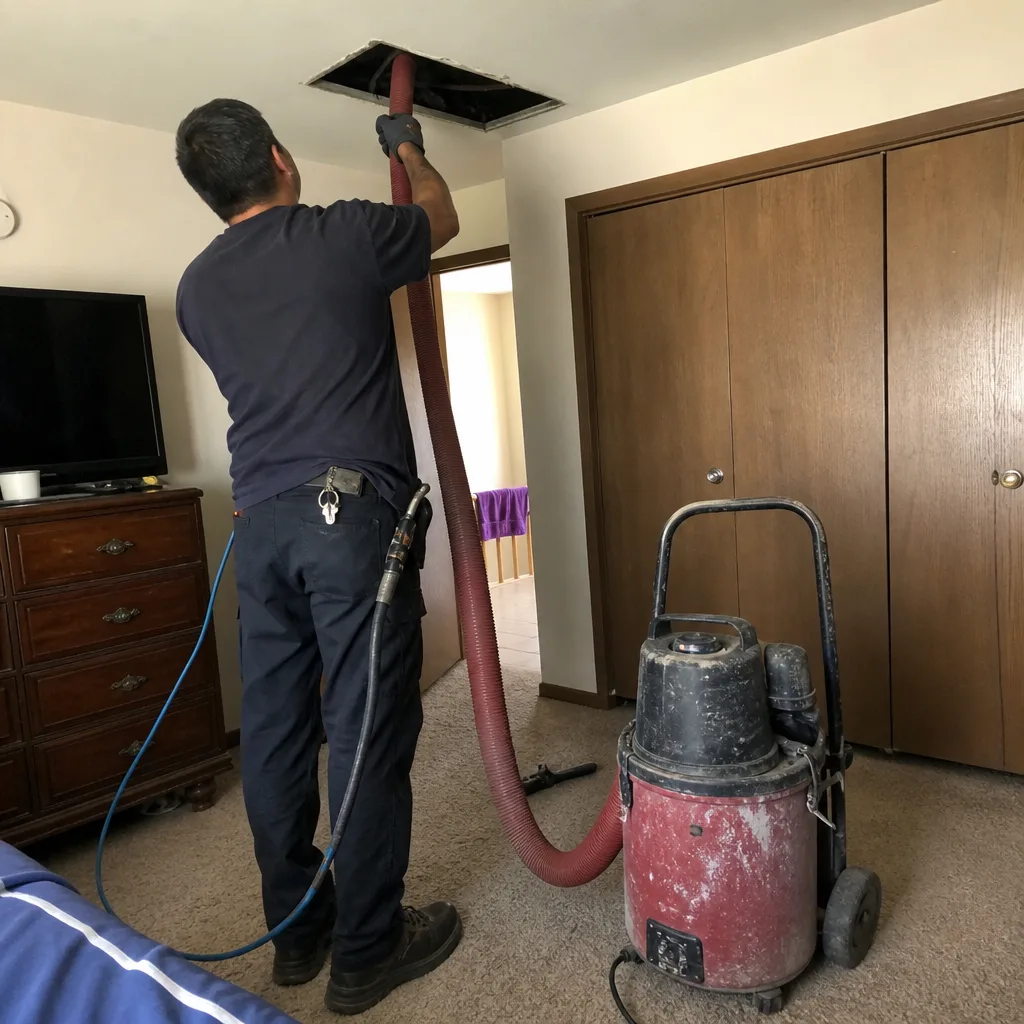 Before
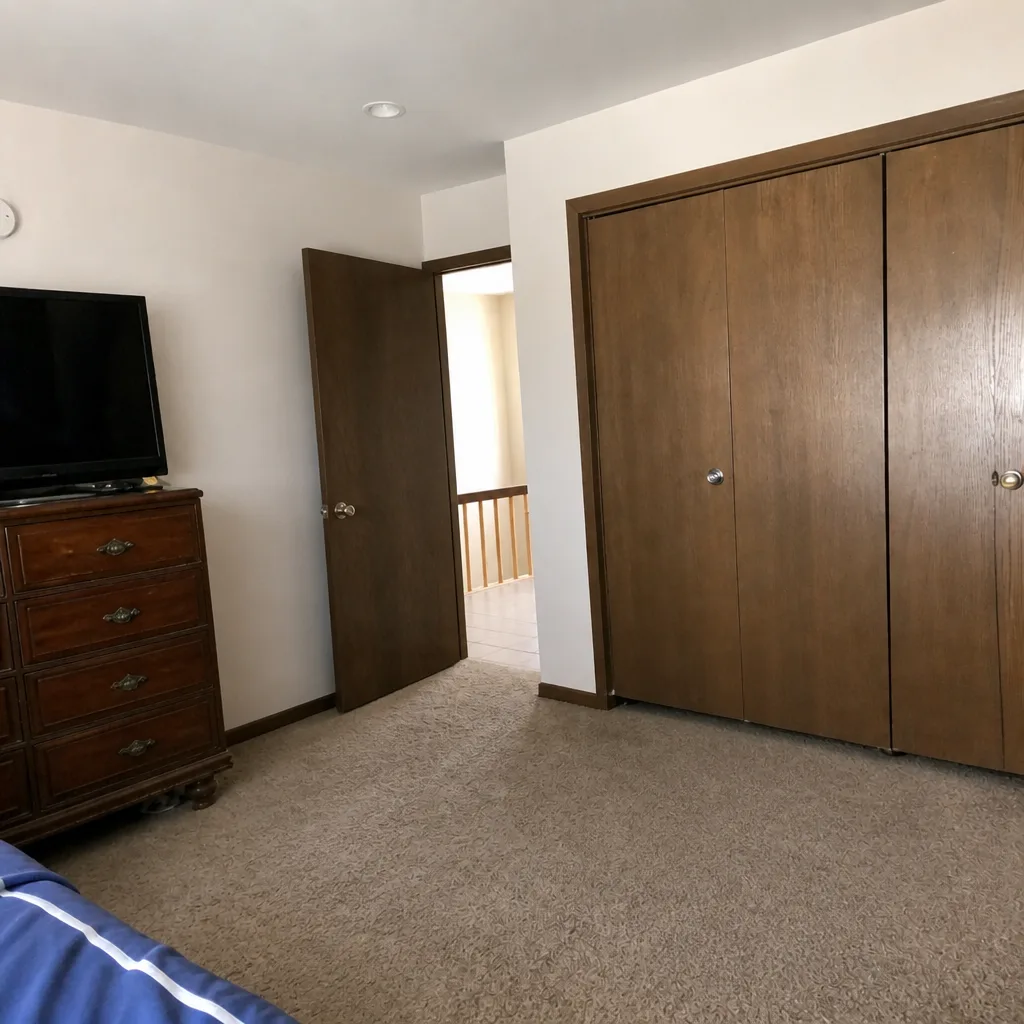 After
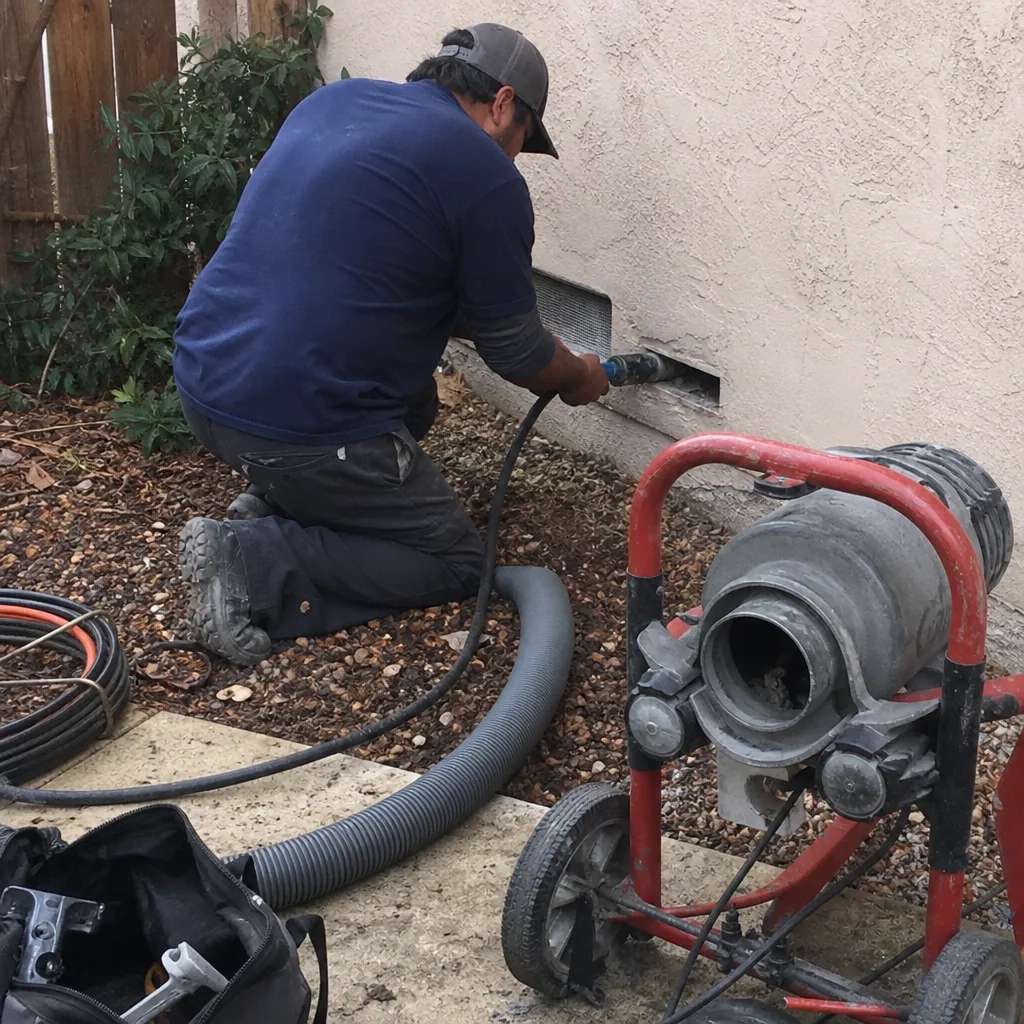 Before
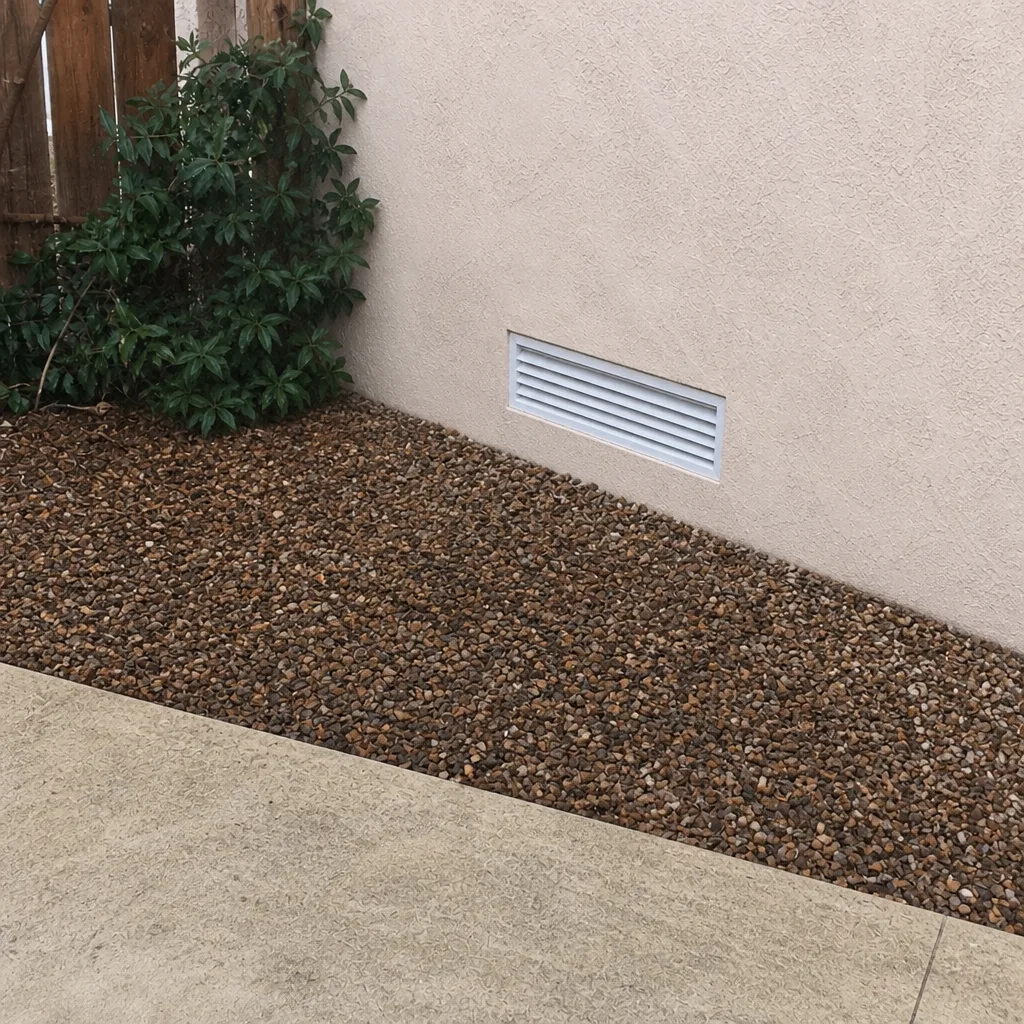 After
Common Mistakes to Avoid
- Pushing a shop vac hose down a supply run. Without negative pressure on the trunk, the hose just loosens everything and pushes it deeper. You can end up with more indoor dust than you started with.
- Cleaning only the registers and calling the system clean. Registers are 5% of the surface area. The rest of the run carries the dust that actually blows back into the room.
- Hiring on the coupon price alone. A teaser price that becomes a much larger invoice after the technician arrives is the classic bait-and-switch complaint. Ask for one flat price per system, agreed before work begins.
- Skipping the before-and-after photos. If a company can’t show you what your ducts looked like before and after, you have no way to know what work was actually performed.
- Ignoring the dryer vent for years. In Antioch’s dry climate, lint accumulates fast and often. A dryer vent that’s never been cleared is a genuine fire risk, not a maintenance suggestion.
- Assuming duct cleaning fixes airflow problems. Low airflow usually points to filter restriction, a failing blower, blocked return, or a collapsed run. Cleaning helps, but it isn’t a substitute for diagnosing the actual cause.
- Trusting a “cleaned” claim without a scope. Ask exactly which runs were cleaned, whether the return system was included, and whether any repair was needed and performed. A vague answer is your cue to keep looking.
When to Call a Professional
Call a professional when the work you need goes beyond the reach of what you can safely do yourself. That means: post-renovation cleanup, smoke residue after a fire event, rodent intrusion in the ducts, a dryer vent with a long or complicated run, persistent musty smells when the HVAC runs, visible debris blowing out of registers, or any sign of damaged or disconnected ductwork. If you’re not sure where the line is, call and describe what you’re seeing – we’ll tell you honestly whether you need a visit. If a repair is needed – and cleaning often reveals one – that’s the moment having a company that also performs air duct repair matters. We repair what we find, rather than handing you a second phone number. Duct Cleaning Antioch offers free estimates in Antioch. Call (877) 212-3243. We answer 24/7, with fast dispatch from 7am to 7pm, Sunday through Friday.
Frequently Asked Questions
You can clean the register covers, the boots behind them, the return filter rack, and your dryer vent with consumer tools. You cannot effectively clean supply or return trunk lines, because that requires simultaneous agitation and negative-pressure extraction. The honest split: DIY for the surface, professional for the interior.
Typical professional whole-system cleaning in Antioch runs roughly $350 to $700 depending on system size and accessibility, with dryer vent cleaning typically $100 to $175. Those are estimates; the written estimate sets the final price. Call (877) 212-3243 for an exact quote – estimates are free.
No. A shop vac moves in the range of 150 to 250 CFM at the hose, while effective duct cleaning requires roughly 4,000 to 6,000 CFM at the air handler to remove debris rather than displace it. A shop vac can make things worse by loosening dust and pushing it deeper into the system.
It depends on how often you’ll use it. For a homeowner who wants to do routine branch cleaning and dryer vent work every year or two, a handheld unit pays for itself over time. For a one-time job, a professional clean is usually cheaper than buying the equipment and still needing professional service on the trunks.
Usually because they cover less. A very low quote often cleans only the accessible registers or uses a single pass with consumer-grade equipment, then adds charges once the technician is on site. A legitimate quote covers the full system at one flat price agreed before work begins, with before-and-after photos of your own ducts to verify the work.
Ask two questions: what’s included (which runs, whether returns are covered), and can I see before-and-after photos of my own system? A company that can show you the interior of your ducts before and after has nothing to hide. A company that can’t, or won’t, tells you something too.
The Bottom Line
DIY duct cleaning is a real option for a home in good shape that needs routine register and grille work and a dryer vent cleared. It falls short the moment the goal is cleaning the interior of a supply or return trunk, because that work depends on equipment moving thousands of CFM under simultaneous agitation. For Antioch homeowners, the decision comes down to what’s actually inside the system: a newer, well-maintained home is often fine with DIY, while a post-renovation home, a smoke-event home, or a home with rodent intrusion needs professional attention. Run the cost math honestly, ask the two questions on the bottom of this page, and call us if the answer points to professional work. For air duct repair or anything else we find along the way, we handle that too.
For homes in the wider area, we also publish guidance on related local service, including our Antioch page and our dryer vent cleaning resources if the dryer vent is your priority.
Ready to get an exact number or make sure you get the right result the first time? Contact Duct Cleaning Antioch. Call (877) 212-3243. We answer 24/7. Fast dispatch from 7am to 7pm, Sunday through Friday. Estimates are free, and the written estimate sets the final price.
Written by the team at Duct Cleaning Antioch.