
Last updated November 15, 2026
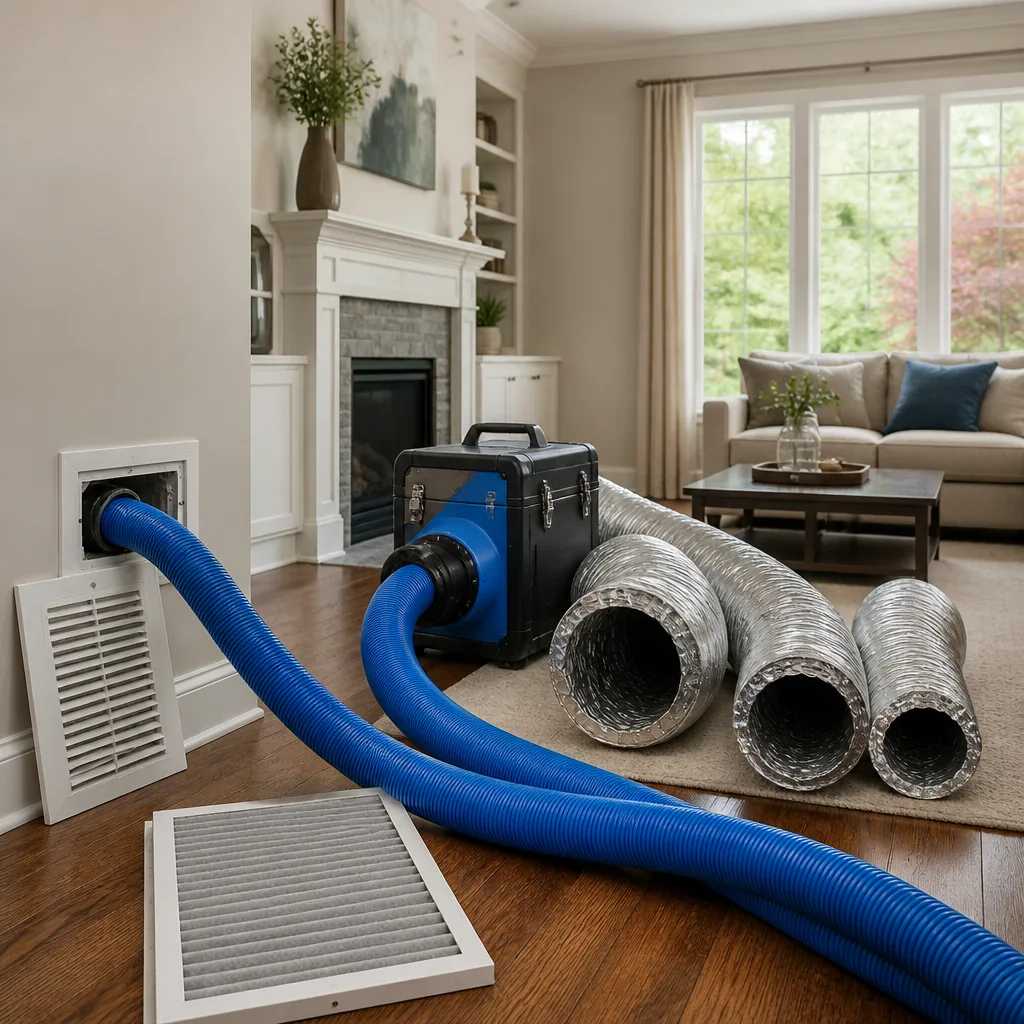 Whole-home duct cleaning
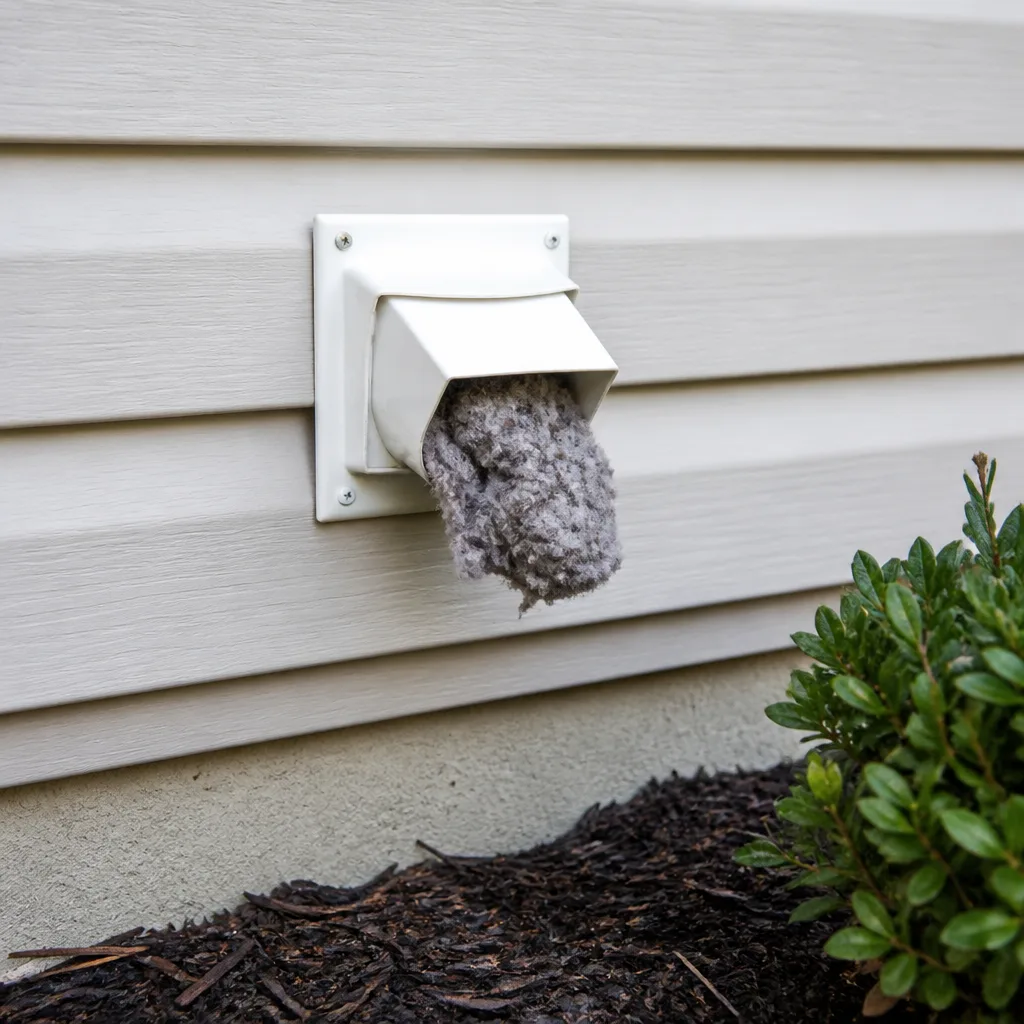 Dryer vent cleaning
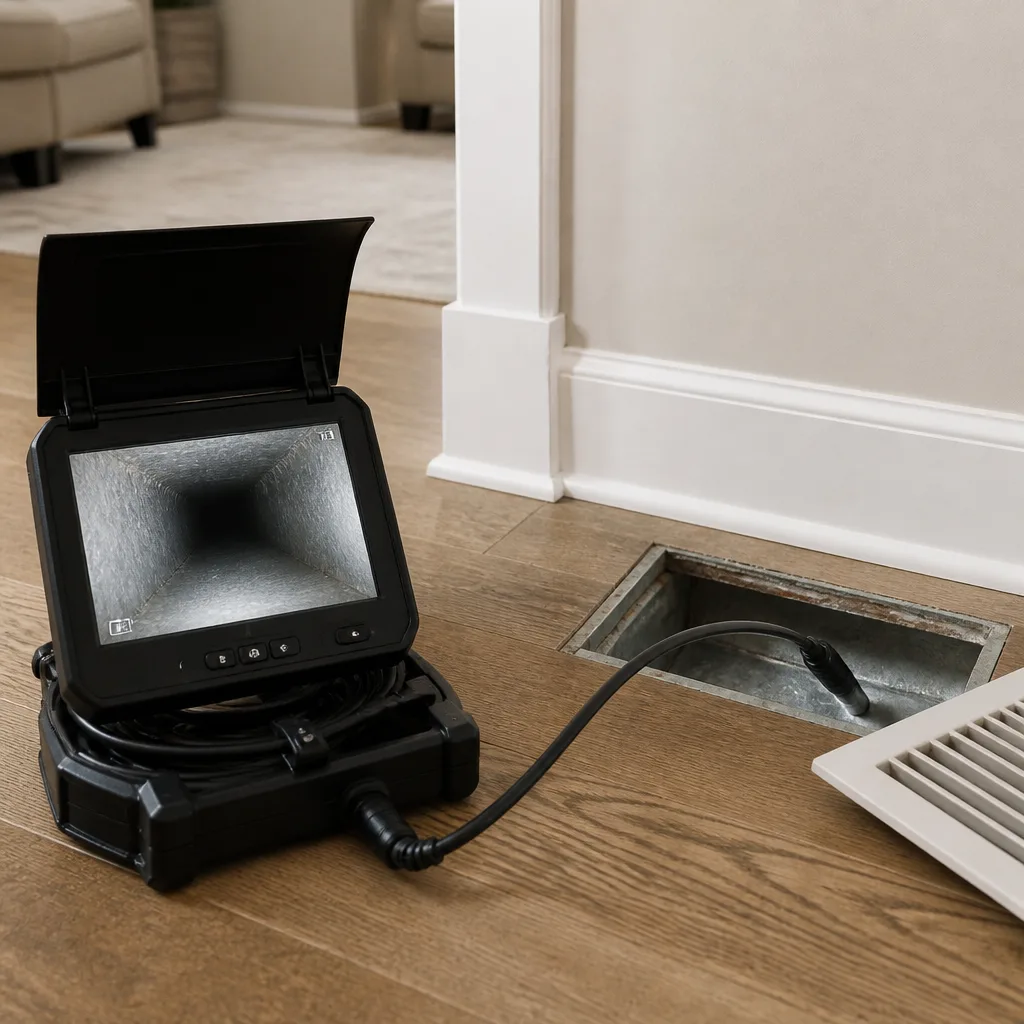 Camera inspection
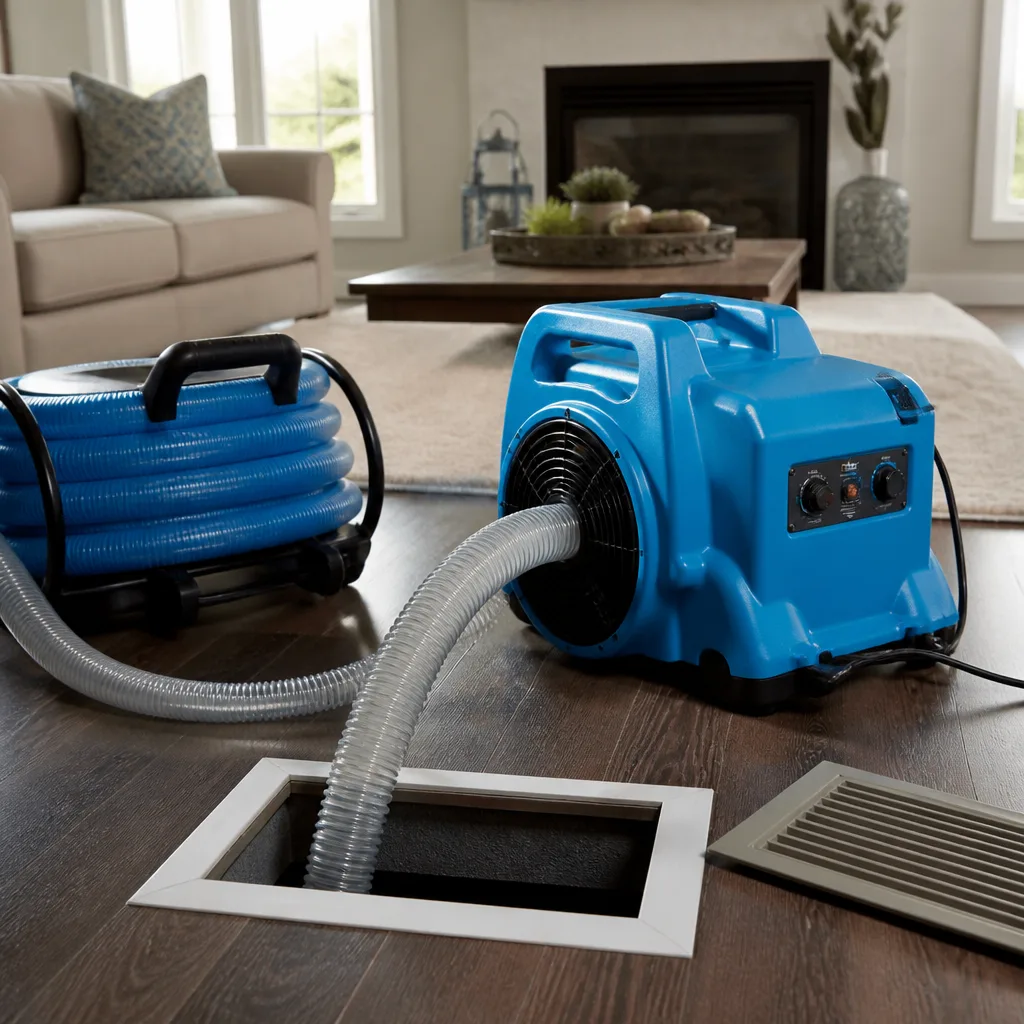 Sanitizing & deodorizing
Whole-system duct and dryer vent check with before-and-after photos - you see exactly what came out of your vents
That "$99 whole-house special" is a bait ad - the real number appears once they are in your hallway, or the "clean" is a shop-vac at the register. We photograph the inside of your ducts before and after instead.
Air Duct Cleaning Permits, Codes & Inspections in Antioch, CA: What You Need to Know
A duct cleaning crew finishes the job and reattaches a sagging flex duct run with new mastic and self-tapping screws. That single act changes everything about the visit. It’s no longer just cleaning; it’s a repair, and in California that means the contractor pulling the screw gun is supposed to hold a C-20 or C-38 license, and depending on the scope, a municipal permit may apply. Most homeowners never learn where that line sits until a sale, a claim, or a failed inspection forces the question. This guide walks through the difference between cleaning and modification, when Antioch’s building department gets involved, how unpermitted repair work complicates insurance and disclosures, and what a legitimate permit pull actually looks like. If you’d rather just call, reach us at (877) 212-3243.
Quick Answer
Routine air duct cleaning does not require a permit in Antioch or anywhere in California. The moment a technician seals, re-straps, replaces, or reroutes duct sections, the work crosses into mechanical repair or alteration. That usually requires a licensed C-20 (warm-air HVAC) or C-38 (refrigeration) contractor, and permits are issued by the City of Antioch’s building department based on the scope of work. Homeowners hiring a cleaner should ask, before anyone starts, whether any repair is likely and who holds the license if it is.
Styles & brands we work with
- Whole-home duct cleaning
- Dryer vent cleaning
- Camera inspection
- Sanitizing & deodorizing
Table of Contents
- Cleaning vs. Repair: Where the Permit Line Falls
- What the California Mechanical Code Says About Ductwork
- How Antioch’s Building Department Handles Duct Work
- Inspections: Who Schedules Them and When
- Unpermitted Work, Insurance Claims, and Sale Disclosures
- What a Licensed Contractor’s Permit Pull Actually Involves
- HERS Testing and California Utility Rebates After Duct Sealing
- When to Call a Professional
Cleaning vs. Repair: Where the Permit Line Falls
Cleaning is a maintenance activity. You’re removing accumulated dust, debris, and biological growth from inside a duct system without altering its physical structure. No permit is required. No license class is technically triggered by the cleaning itself, because you’re not modifying anything that falls under the mechanical code. That’s the scope we work in as an air duct cleaning company.
Repair is different. The moment a technician does any of the following, the work moves into licensed-contractor territory:
- Reconnecting a disconnected duct run to a trunk or plenum
- Sealing joints, seams, or penetrations with mastic, tape, or aerosol sealant
- Replacing or re-routing a flexible duct section
- Re-strapping sagging ductwork to joists or hangers
- Resizing a supply or return to change airflow
- Removing or installing a section of ductboard or sheet-metal duct
Each of these is a modification to the mechanical system, not a cleaning action. In California, that maps to Business and Professions Code licensing requirements for C-20 warm-air heating, ventilating, and air-conditioning contractors, or C-38 refrigeration contractors when refrigerant-side work is involved. A cleaning-only outfit, even one with excellent equipment, isn’t licensed for that repair work.
This is why we tell homeowners in Antioch to ask a pointed question before booking any duct service: “If you find a broken duct while you’re in there, what happens?” If the answer is “we fix it,” verify the license and permit process. If the answer is “we schedule a repair with a licensed HVAC partner,” that’s honest and defensible. If the answer is “we’ll just tape it up,” that’s where the compliance problem starts.
What the California Mechanical Code Says About Ductwork
The California Mechanical Code, which adopts and amends the Uniform Mechanical Code for the state, treats duct systems as part of the mechanical installation. It doesn’t specifically address “cleaning” because cleaning isn’t a code-permitted construction activity. What it does regulate is how ductwork is installed, sealed, supported, and connected.
The provisions that matter for a duct job in Antioch:
- Sealing requirements for joints and seams. Ducts in unconditioned spaces (attics, crawlspaces, garages) must be sealed to specific leakage classes. Reconnecting or replacing a run without meeting that sealing standard is a code violation, not just a bad install.
- Support and strapping. Ducts must be supported at intervals and cannot sag or bear weight. A technician who re-hangs a duct has to meet the code’s hanger and support spacing.
- Clearance to combustibles. Supply ducts near heat sources need minimum clearances. A reroute that ignores this creates a fire hazard that an inspector will flag.
- Connection methods. Code specifies approved closure systems for flexible duct (clamps, mastic, tape). Duct tape alone is not an approved permanent connection, which is why a professional re-seal uses mastic and mechanical fasteners.
None of this is a homeowner’s job to memorize. But knowing it exists is useful, because it explains why a legitimate duct repair is not a twenty-minute fix. Whether the code’s specific provisions apply as “alterations” requiring permits depends on the scope and the local jurisdiction’s interpretation, which leads to the next point.
How Antioch’s Building Department Handles Duct Work
Antioch, like most California cities, issues permits through its building department for mechanical alterations that fall under adopted code. A full duct replacement or a significant reroute typically requires a mechanical permit. A same-section reconnect or a single-joint seal may or may not, depending on how the permitting staff interprets the scope.
The practical reality: interpretations vary. Two technicians describing the same job can get different answers from the same counter. That’s why the written scope of work matters. A licensed contractor pulls a permit based on a specific description, not a verbal “we’re fixing some ducts.”
For homeowners in Antioch, the practical steps when a repair is recommended:
- Get the scope in writing. Ask the contractor to describe exactly what will be repaired, replaced, or sealed.
- Ask whether a permit will be pulled. A legitimate contractor will tell you plainly when a permit is required and when it isn’t, based on the scope.
- Verify the license. Use the California State License Board’s lookup tool to confirm the contractor’s license class (C-20 or C-38) and status.
- Confirm who pulls the permit. In California, the contractor typically pulls the permit on the homeowner’s behalf, not the other way around.
- Get the final inspection signed off. The permit file should close with an inspection, not just a payment receipt.
If you live in an older Antioch neighborhood with attic or crawlspace ductwork running through unconditioned space, ask any contractor about the sealing class of any replaced section. An unsealed reconnect in the attic undoes years of energy improvements.
Inspections: Who Schedules Them and When
When a permit is pulled, an inspection is part of the process. Who schedules it depends on who pulled the permit. In California, the contractor who pulled the permit is responsible for calling the inspection, meeting the inspector on site, and correcting any deficiencies. Homeowners don’t usually call the inspection line themselves unless they pulled the permit as an owner-builder.
What the inspection is looking at:
- Whether the duct connection meets the sealing class for its location
- Whether the duct is properly supported and strapped
- Whether the install meets clearance requirements from combustibles
- Whether the system is continuous and correctly sized for the equipment
- On more complex jobs, airflow and static-pressure measurements
If a technician pulls a permit and then “forgets” the inspection, the permit stays open in the city’s file. That open permit can surface during a property sale, at which point the seller has to correct the deficiency or disclose it. Pulling the permit and skipping the inspection is worse than doing the work without a permit in one narrow sense: it leaves a public record of unfinished work attached to the address.
The timeline depends on the city’s inspection queue and the contractor’s scheduling. The work isn’t considered “closed” in the permit system until the final inspection is signed off. Homeowners should ask their contractor for the permit number and the inspection outcome in writing.
Unpermitted Work, Insurance Claims, and Sale Disclosures
This is where the consequences compound. Unpermitted duct repair creates three distinct exposure points for a homeowner in Antioch.
Insurance. Homeowner policies typically cover sudden and accidental damage, not faulty workmanship. If a duct repair done without a permit later causes water intrusion, mold, or a fire at a connection, the insurer can deny the claim on the grounds that the work wasn’t permitted or that the contractor wasn’t licensed. The policyholder is the one holding the loss.
Sale disclosures. California residential purchase agreements include a Transfer Disclosure Statement and a Seller Property Questionnaire. Sellers are required to disclose known material defects and any work done without permits. A buyer’s inspector who finds unpermitted duct work in the attic can trigger renegotiation, repair credits, or a walk-away. That’s the kind of discovery that costs a seller far more than the permit would have.
Contractor recourse. California’s Contractors State License Board handles complaints against licensed contractors, and its arbitration process applies to licensed work. If the contractor who did the unpermitted duct repair wasn’t licensed, that recourse pathway largely disappears. The homeowner’s only lever becomes civil court.
Before any duct repair on your Antioch home, ask two questions: “Are you licensed for this work,” and “Will you pull a permit for this scope?” If either answer is uncomfortable, pause the job.
What a Licensed Contractor’s Permit Pull Actually Involves
“We’ll handle the permit” is a common phrase. It’s worth knowing what that actually means so you can tell whether it’s real.
- Scope of work. The contractor writes a scope describing precisely what’s being altered, replaced, or sealed, along with locations.
- Application. The contractor files a mechanical permit application with the City of Antioch’s building department, typically online or at the counter.
- Fee payment. The permit fee is paid, usually by the contractor and included in the job cost. It’s not a homeowner transaction.
- Plan check. For more complex alterations (full duct replacement, new equipment, changed routing), the plans may need review before the permit is issued.
- Permit issuance. The permit number is assigned and posted at the job site.
- Work and inspection. The contractor performs the work, calls for inspection, and the city inspector verifies compliance.
- Final sign-off. The permit closes in the city’s system. The homeowner should receive documentation of this.
This process takes days, not hours. That’s why a contractor who “will handle the permit” as part of a same-day duct cleaning is either (a) describing a job that doesn’t actually require a permit, or (b) not being accurate about what’s happening. When we recommend a repair at Duct Cleaning Antioch, we tell the homeowner plainly whether the scope is likely to require a permit and who the licensed HVAC contractor will be.
HERS Testing and California Utility Rebates After Duct Sealing
Duct sealing done properly can qualify a homeowner for utility-sponsored programs in California, and HERS (Home Energy Rating System) raters play a role in that process. The specifics change over time and vary by utility and program, so the right move is to verify with your utility provider and your rater before any work starts.
What HERS testing involves:
- Duct leakage testing. The rater pressurizes the duct system and measures leakage to outside using calibrated equipment. Results are reported as a percentage of system airflow.
- Verification of installation. The rater confirms the sealing work was performed as specified, including materials and coverage.
- Documentation to the utility. The rater submits results to the program administrator, which determines qualification.
The key thing homeowners should know: HERS testing is not the same as a building department inspection. They’re separate processes, run by different people for different purposes. A repair can be code-compliant and inspected, but still fail to qualify for a rebate if the measured leakage exceeds the program threshold. Or a rebate qualification can succeed without a building permit being involved.
If you’re pursuing a rebate, ask the contractor upfront whether the work will meet HERS verification requirements and whether the scope will pass a duct-blaster test after sealing. The most common failure mode is sealing that looks comprehensive but leaves distributed leakage at the air handler, plenum, or boot connections. Abatement Technologies negative-air filtration during the cleaning phase helps keep dust confined, but the actual sealing work is what determines the test result.
See the difference
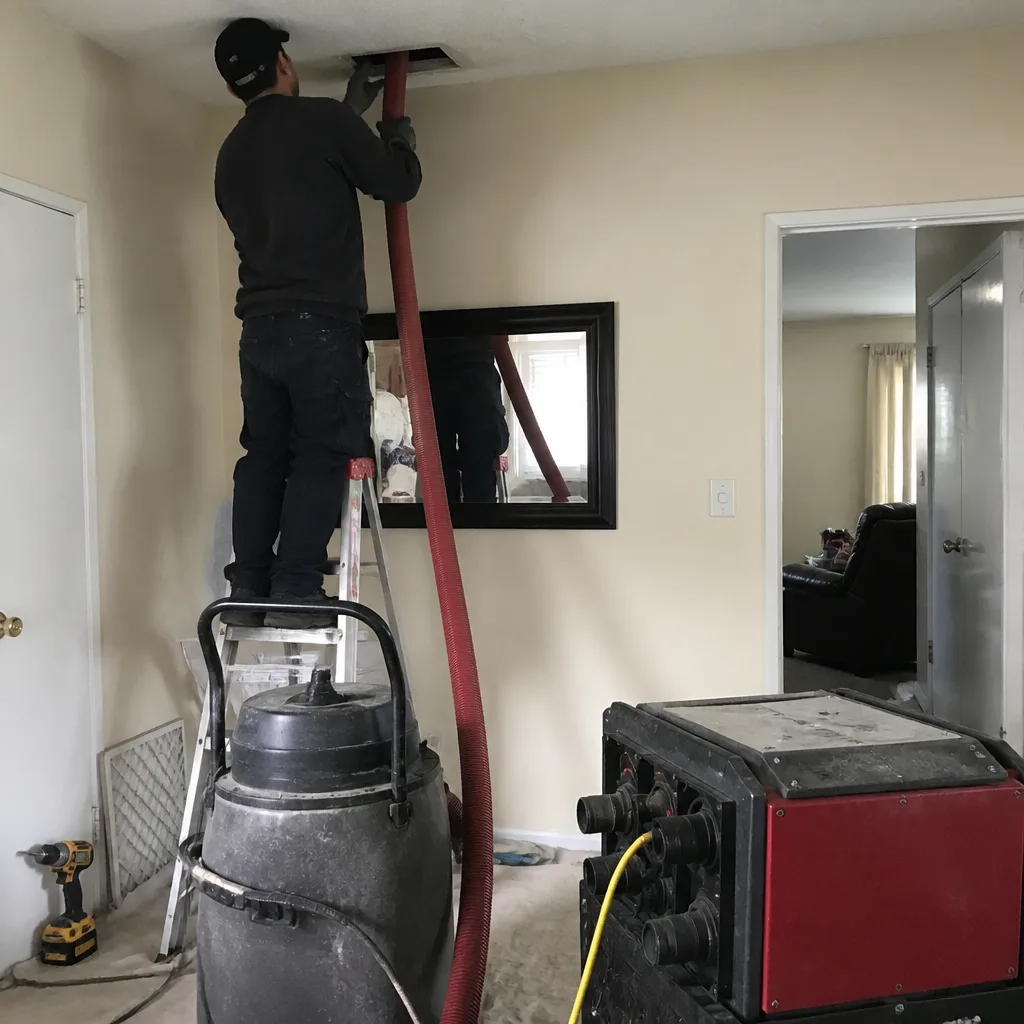 Before
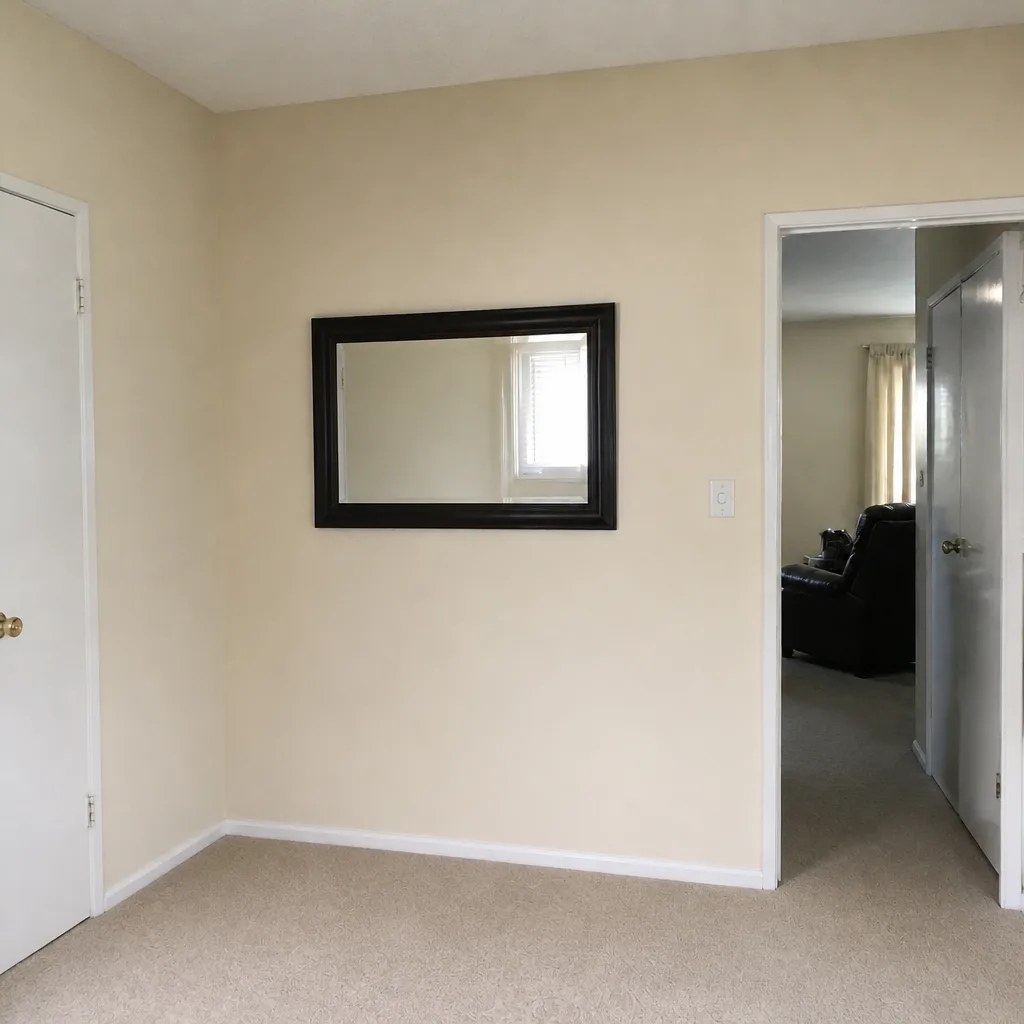 After
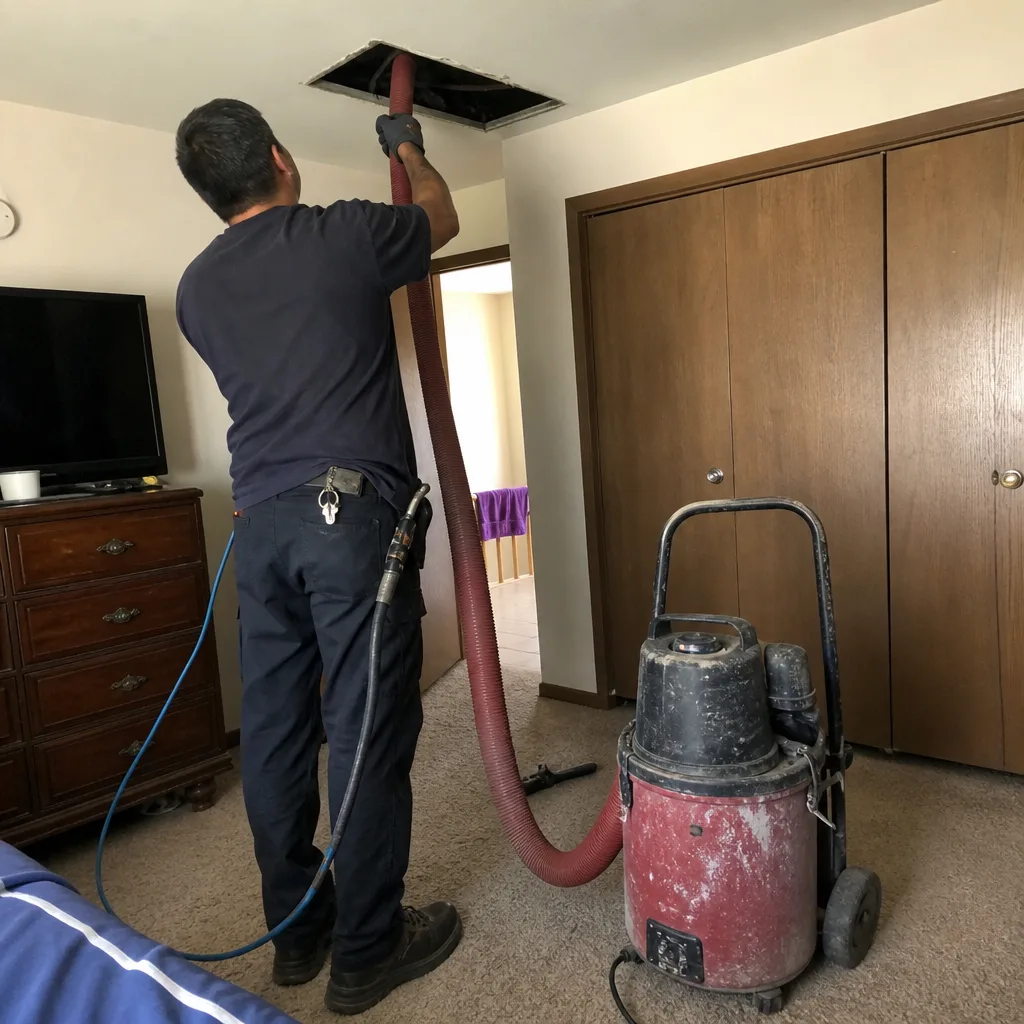 Before
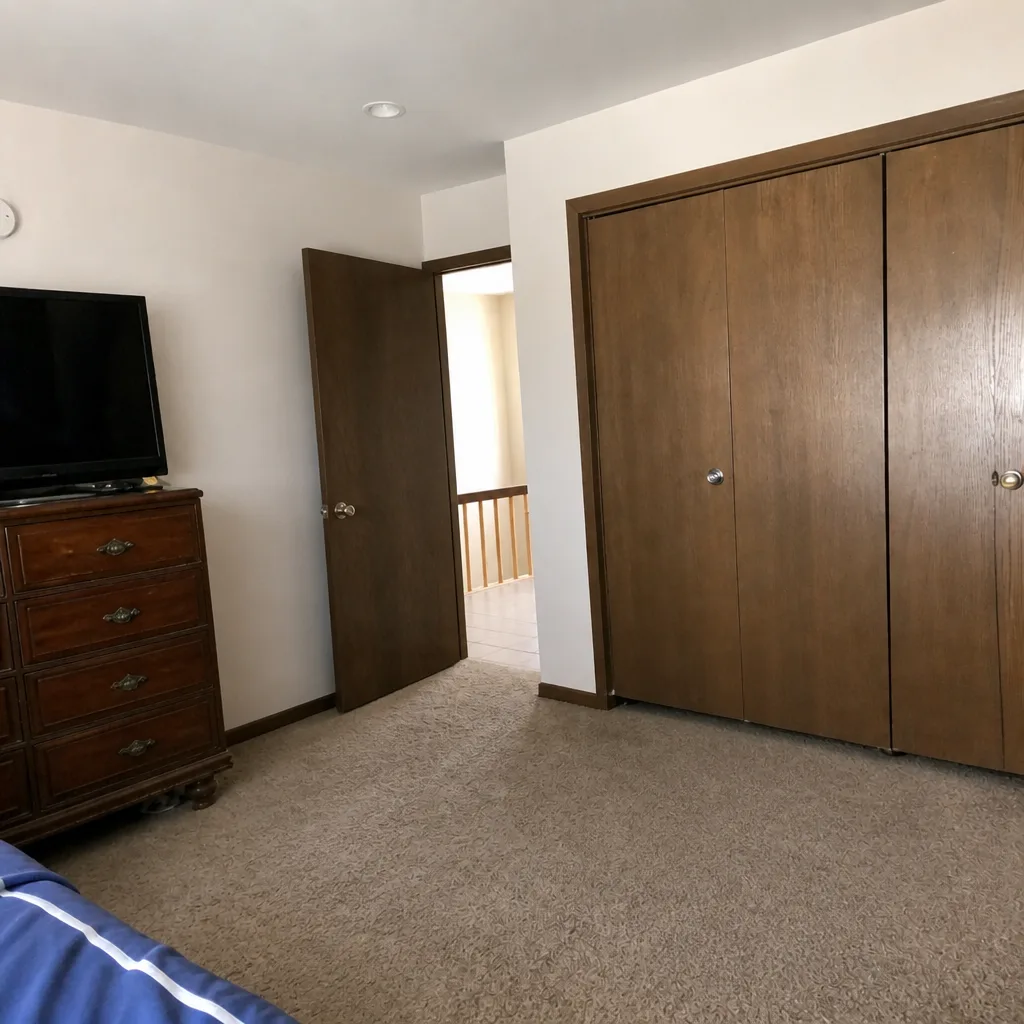 After
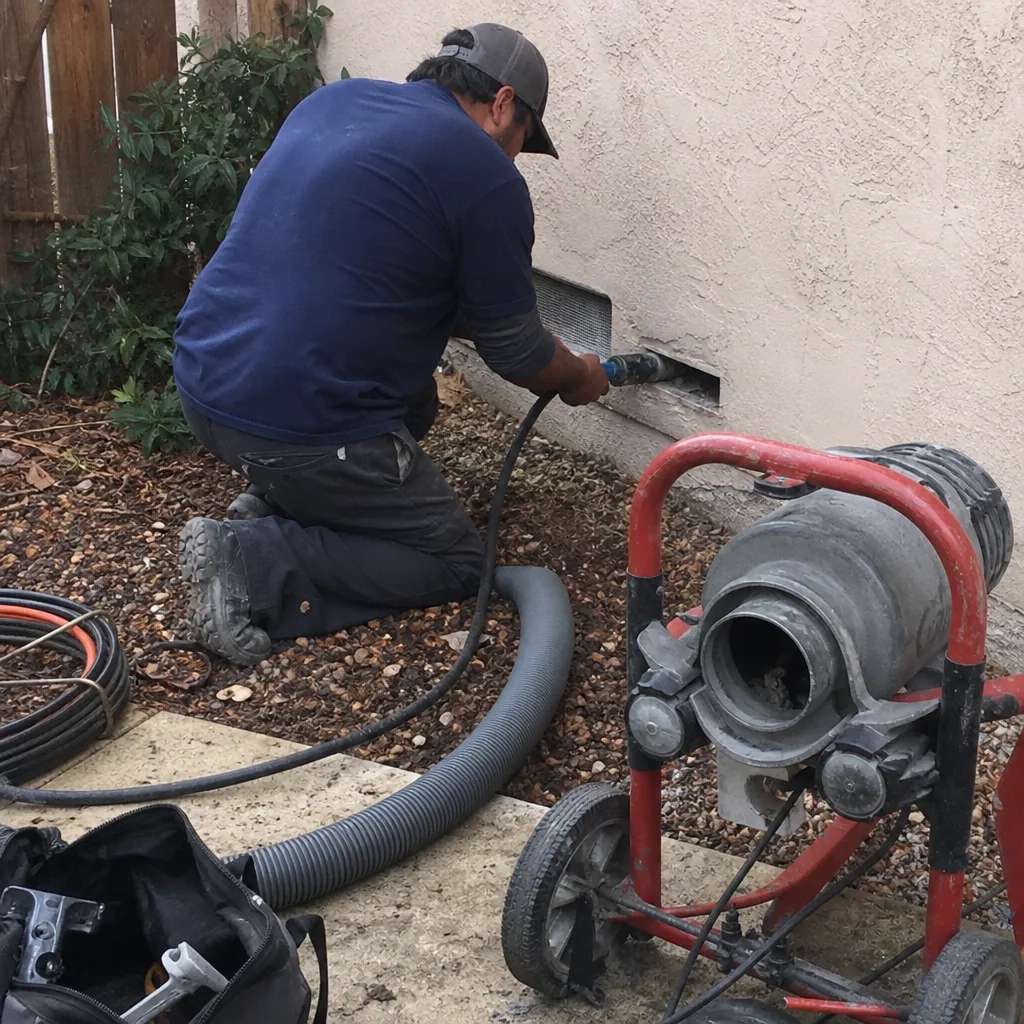 Before
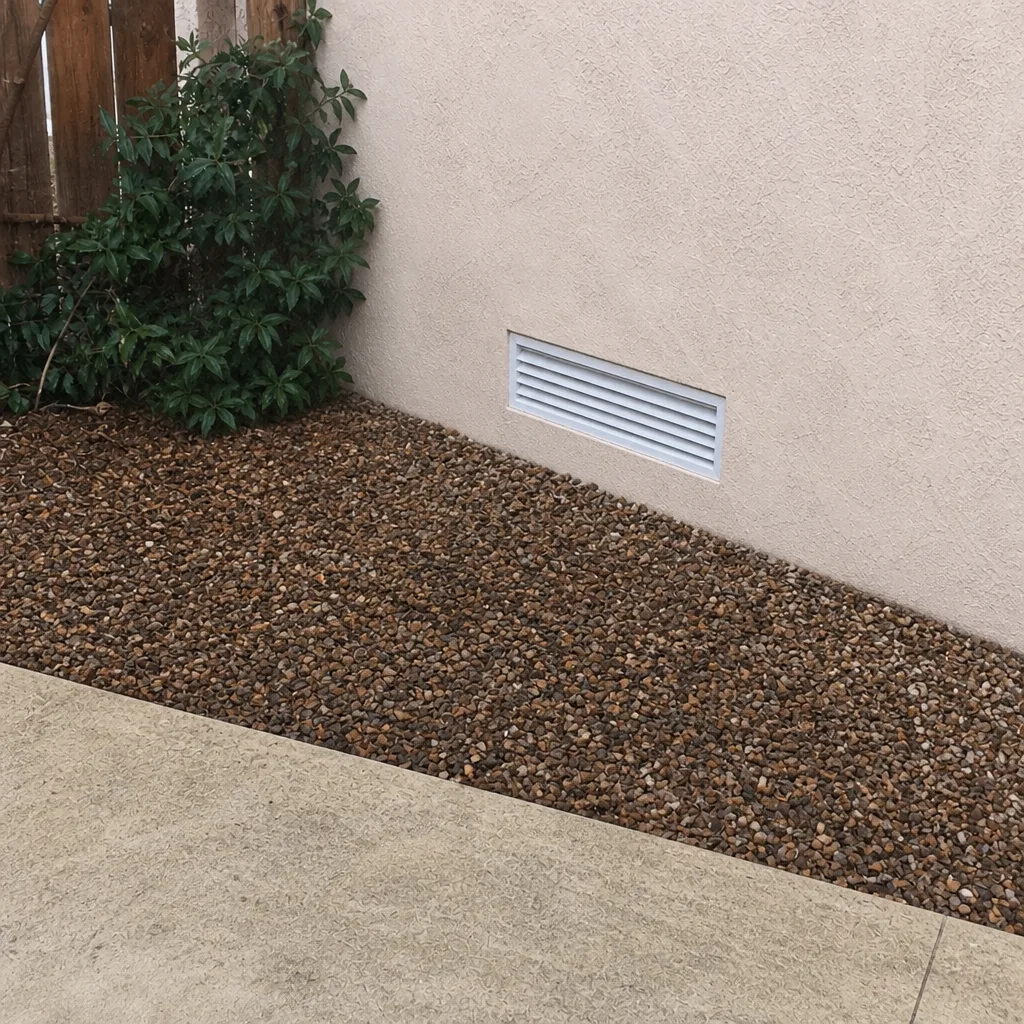 After
Common Mistakes to Avoid
- Accepting a verbal “we’ll fix it if we find anything.” A verbal agreement doesn’t establish license class, permit responsibility, or scope, and it’s nearly impossible to enforce if something goes wrong. Get the repair scope in writing before anyone starts.
- Assuming duct cleaning always requires a permit. Cleaning doesn’t. Only the repair or modification work does. A company that scares you into a permit for routine cleaning is overreaching.
- Using duct tape for a permanent reconnect. Duct tape is not an approved closure method in the California Mechanical Code for permanent connections. It loses adhesion quickly in attic heat and leaves an unsealed joint that fails the next HERS test.
- Skipping the license check. The California State License Board’s lookup is a two-minute process. Running it before booking is the cheapest insurance a homeowner can buy. Confirm the class covers HVAC work, not just general cleaning.
- Not asking for the permit number after the job. If a permit was pulled, the number should be on the paperwork and the inspection should be documented as passed. An open permit is worse than no permit at resale.
- Assuming HERS testing is inspection. They’re separate processes. A repair can pass building inspection and still fail HERS verification, or vice versa, and the contractor should explain the difference before starting.
- Booking a cleaning and repair in the same visit without clarifying who does what. If a cleaning company is not licensed for the repair, the repair should be scheduled separately with a licensed contractor and a clear scope. Bundling it into the cleaning invoice creates a paperwork trail that doesn’t match the license reality.
When to Call a Professional
Call a professional if you’ve seen visible dust blowing from supply registers after HVAC runs, if you smell musty air when the system turns on, if your energy bills have crept up without a change in usage, or if a recent remodel left construction dust in the system. Call if you’ve never had the system cleaned and the home is older. Call if a technician has told you a duct is disconnected or leaking and you’re not sure whether a permit is involved. Call before scheduling any repair work priced into a cleaning invoice without a clear licensed-contractor scope. We offer free estimates in Antioch; reach us at (877) 212-3243. We answer 24/7. Fast dispatch from 7am to 7pm, Sunday through Friday. Our technicians have up to 8 years of experience, and we use professional-grade equipment from Rotobrush and Nikro for cleaning, with Abatement Technologies filtration for containment. We also perform air duct repair when the scope calls for it, and we’ll tell you plainly when a permit applies.
Frequently Asked Questions
No. Routine air duct cleaning is a maintenance activity and does not require a permit in Antioch or anywhere in California. Permits come into play only when the work involves mechanical alteration such as replacing, re-routing, sealing, or re-strapping duct sections, which is repair rather than cleaning. Call (877) 212-3243 for an exact quote on cleaning, or to discuss a repair scope – estimates are free.
The licensed contractor performing the work is responsible for pulling the permit in almost all cases. In California, the contractor (not the homeowner) files the mechanical permit application with the City of Antioch, pays the fee, and is responsible for scheduling the inspection and closing the permit. Homeowners can pull permits as owner-builders in some cases, but the practical and insurance-safe arrangement is to let the licensed contractor handle it.
A C-20 warm-air HVAC license covers duct repair and mechanical work. C-38 refrigeration licensing applies when refrigerant-side work is involved. Verify the specific contractor’s license class and status through the California State License Board before hiring. Cleaning-only companies generally do not hold these licenses, which is why a cleaning and repair should either be done by a licensed HVAC contractor or coordinated separately.
Yes. California sale disclosures require sellers to disclose unpermitted work, and a buyer’s inspector who finds open permits or unpermitted duct alterations can trigger renegotiation, repair credits, or a walk-away. The cost of correcting unpermitted duct work is usually far higher than the original permit would have been. It’s worth pulling permits properly at the time of the work.
No. HERS testing is a separate verification process used for energy program qualification and rebate eligibility. It’s performed by a certified HERS rater and measures duct leakage and installation quality. A building inspection is performed by the City of Antioch building department and verifies code compliance. Both can apply to the same job, but they don’t substitute for each other.
Contact the City of Antioch building department and request a permit history for your address. The record will show any permits pulled, whether inspections were passed, and whether permits remain open. Buyers should do this before closing, and homeowners should keep copies of their own permit files after any duct repair. Running a permit history is often free and can be done over the phone or online.
Whole-system duct repair in Antioch usually runs from about $450 to $2,800 depending on scope – single reconnect, several runs, or partial replacement. Sealing alone typically falls in the $300 to $900 range. A permit fee, where required, is usually a modest line item on top of that. The written estimate sets the final price, so ask for it in writing before you book. Call (877) 212-3243 for an exact quote – estimates are free.
Cheap quotes usually mean cleaning-only scope with no repair capability, no licensed HVAC contractor on the job, no permit handling, and bargain-tier equipment. The gap isn’t a better deal – it’s a different, narrower job. Ask a low quote two questions: “What happens if you find a disconnected duct,” and “Do you hold a C-20 or C-38 license?” The answers usually tell you what you’re actually paying for.
Every three to five years is a reasonable baseline for most Antioch homes, and sooner after a remodel, after any pest activity, or if allergy symptoms worsen when the system runs. Duct repair is on a different schedule – only when a specific defect is identified. Regular cleaning lets those defects get caught early, before they turn into repair scope. Call (877) 212-3243 for an exact quote – estimates are free.
The Bottom Line
Cleaning doesn’t need a permit. Repair might. That single distinction drives almost every compliance, insurance, and resale consequence in this guide. Before any duct service in Antioch, ask whether the scope involves a repair, who holds the C-20 or C-38 license if it does, whether a permit will be pulled with the City of Antioch, and whether the work needs to pass HERS verification for a utility rebate. Get the scope in writing. Verify the license through the California State License Board. Keep the permit file. The cost of doing it right is small compared to the cost of doing it wrong.
Duct Cleaning Antioch handles the full scope – cleaning with professional-grade Rotobrush and Nikro equipment, Abatement Technologies filtration for containment, and licensed partner repair work when the job crosses the permit line. We also do dryer vent cleaning as a distinct fire-safety service, and we work with Honeywell and Aprilaire product lines when filtration upgrades make sense post-cleaning. If you’re not sure which scope your job falls into, start with a call. We answer 24/7. Fast dispatch from 7am to 7pm, Sunday through Friday. Free estimates in Antioch and the surrounding area. Call (877) 212-3243.
Written by the team at Duct Cleaning Antioch.