
Last updated November 15, 2026
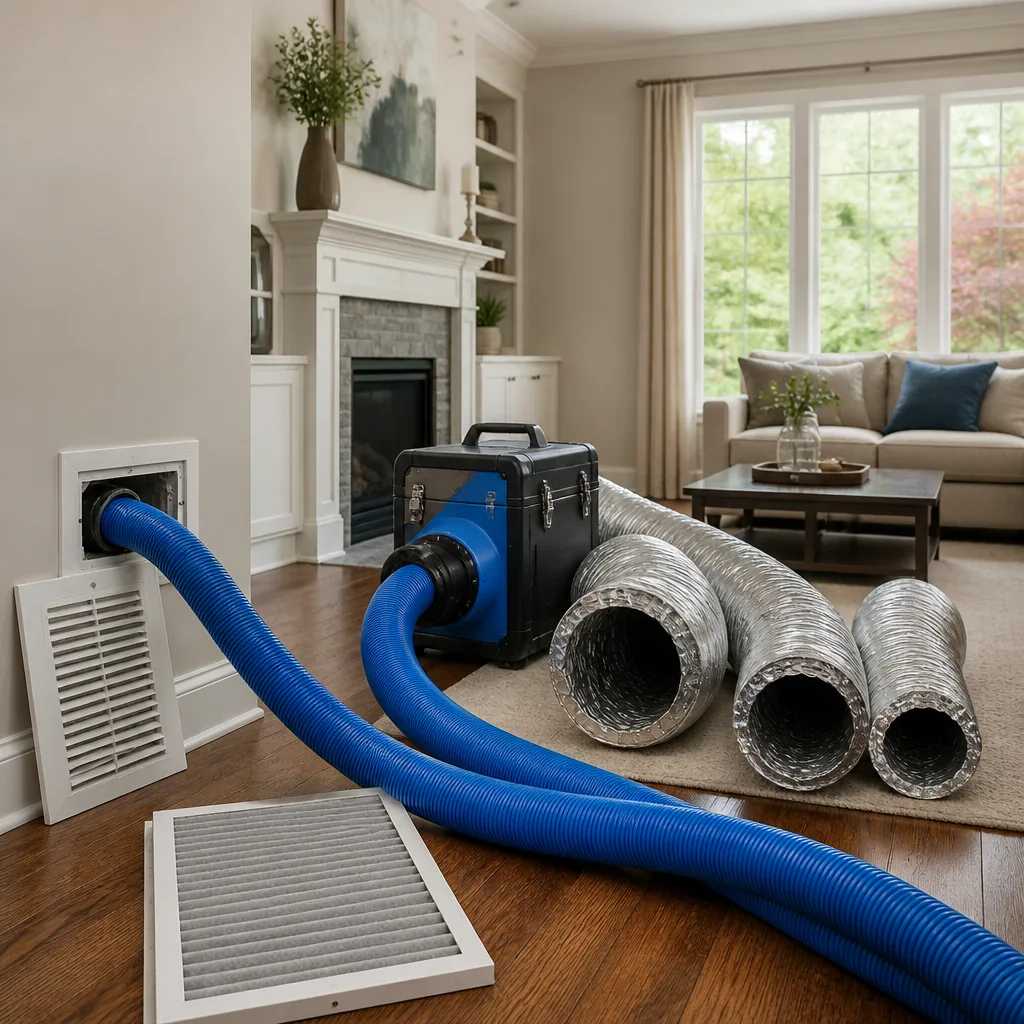 Whole-home duct cleaning
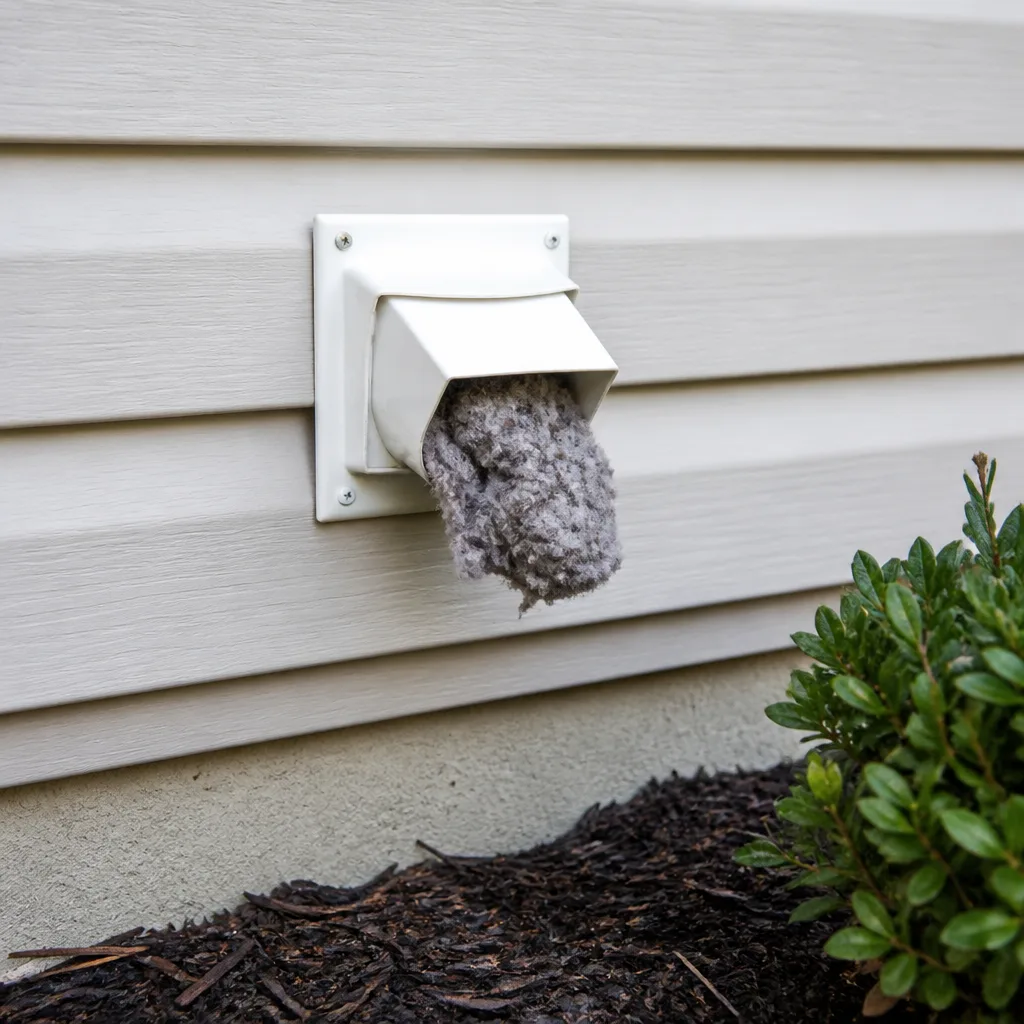 Dryer vent cleaning
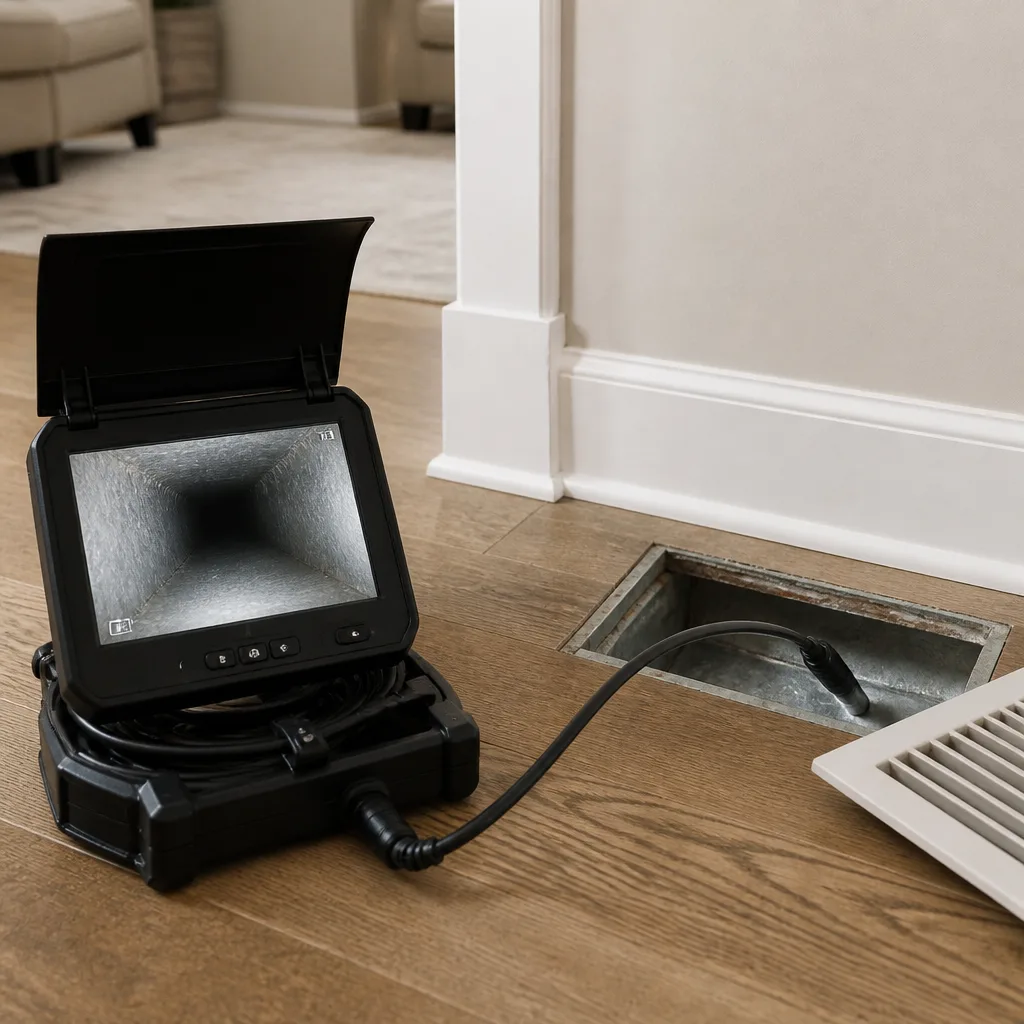 Camera inspection
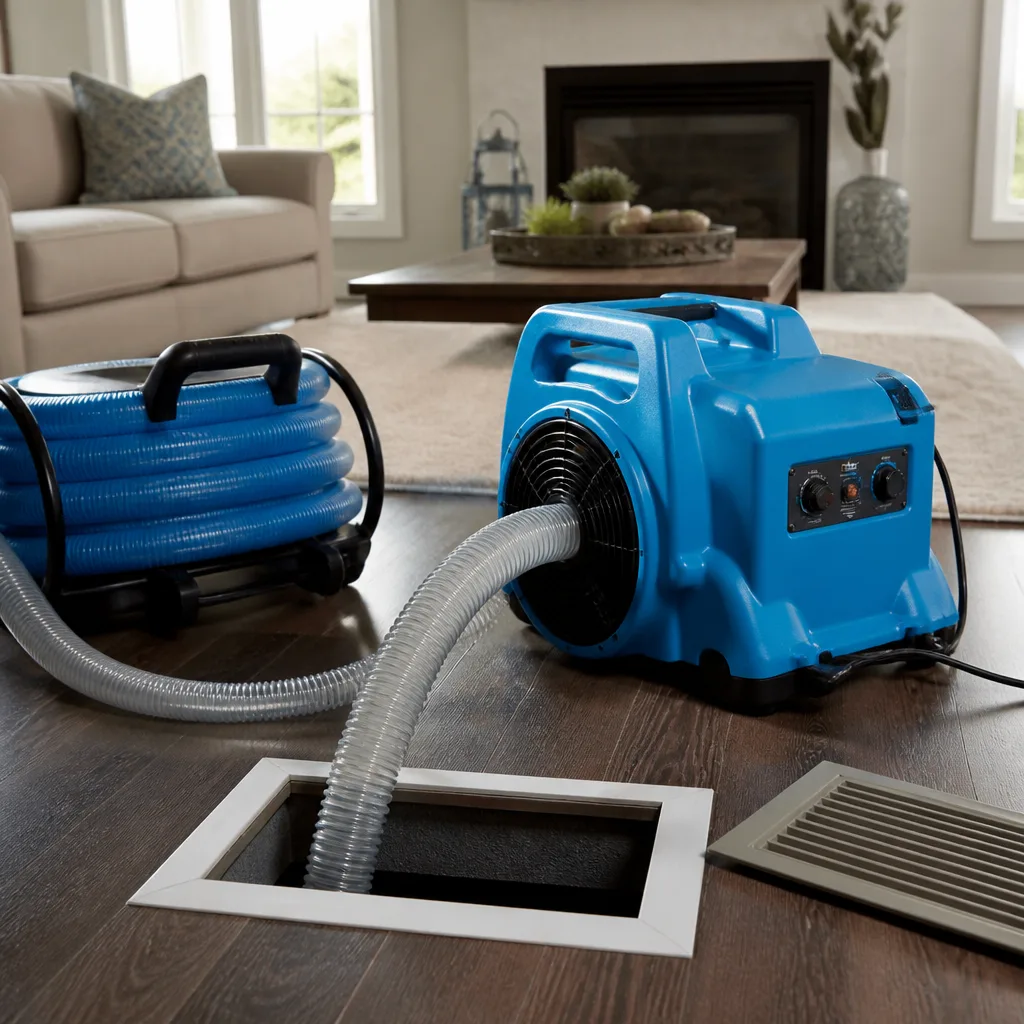 Sanitizing & deodorizing
Whole-system duct and dryer vent check with before-and-after photos - you see exactly what came out of your vents
That "$99 whole-house special" is a bait ad - the real number appears once they are in your hallway, or the "clean" is a shop-vac at the register. We photograph the inside of your ducts before and after instead.
Choosing the Right Air Duct Cleaning Brand: A Buyer’s Guide for Antioch
When you hire a plumber, you don’t ask what brand of pipe snake they carry. You ask whether they can find the leak and fix it. Duct cleaning is different, and that difference is the whole problem. Two operators can both call themselves “professional duct cleaners,” show up in unmarked vans, and quote a number over the phone. One may be running a portable unit that fits in a car trunk. The other may be running a truck-mount negative-air machine rated to hold a house under containment while the ducts are agitated. The results are not close. And because duct cleaning has no strong consumer-facing brand the way appliances or HVAC equipment do, homeowners in Antioch have almost nothing to compare against except price. This guide fixes that. It’s written to give you the questions, the vocabulary, and the benchmarks so you can evaluate any company on equipment and process rather than a coupon.
Quick Answer
The right air duct cleaning company in Antioch is the one that can name its equipment, explain its extraction method, and show you before-and-after documentation of your own system. Ask specifically about the machine categories: Rotobrush brush agitation, Nikro or ProAir portable HEPA extraction, and Abatement Technologies negative-air filtration used for containment. A company that can talk through those tools in plain terms, and that inspects before it cleans, is far more likely to deliver real contamination removal than one quoting a teaser price per vent.
Styles & brands we work with
- Whole-home duct cleaning
- Dryer vent cleaning
- Camera inspection
- Sanitizing & deodorizing
Table of Contents
- The Professional Equipment Brands That Actually Matter
- Truck-Mount vs. Portable: What the Difference Really Is
- Why HEPA Filtration on the Extraction Machine Matters
- How to Ask a Contractor About Their Equipment
- What Equipment-Serious Companies Do Differently
- Antioch Conditions That Change the Job
- The Repair Gap: Why Cleaning Isn’t Enough
- Dryer Vent Cleaning: A Separate Safety Category
The Professional Equipment Brands That Actually Matter
There are no Consumer Reports rankings for duct cleaning machines. That’s exactly why knowing the brand names helps. The professional duct cleaning market is served by a small number of manufacturers whose tools show up in commercial buildings, hospitals, and mold remediation work. When a residential company uses the same category of equipment, it’s a signal that the job is being handled as a contamination-control problem, not a vacuuming task.
The four names that come up most often are Rotobrush, Nikro, Abatement Technologies, and ProAir. Each occupies a slightly different slot in the process.
- Rotobrush is best known for brush agitation systems. A rotating brush head travels through the duct run, loosening the bonded dust and debris that a vacuum alone won’t lift, particularly on the corrugated interior of flex duct.
- Nikro builds portable and truck-mount HEPA vacuum systems along with negative-air machines. Their gear is common in restoration and remediation work, where airborne containment is the whole point.
- Abatement Technologies is a name you’ll see on negative-air filtration and HEPA air scrubbers. In duct cleaning, negative-air equipment holds the work area under pressure so debris doesn’t migrate into the living space.
- ProAir manufactures high-CFM negative-air and extraction equipment used in both residential and commercial duct work.
Here in Antioch, most homes are single-story or two-story tract construction with flex duct in the attic or in soffits. Flex duct is the reason brush agitation matters so much. The ribbed interior traps dust in the ridges, and a simple vacuum pass skims the peaks while leaving the valleys loaded. A company that names its agitation method and can describe how it handles flex runs is telling you it understands the material it’s working with. A company that says “we vacuum the ducts” hasn’t given you anything to evaluate.
Ask any candidate which brand of machine will be on site. If the answer is vague, the equipment is probably generic. A company that packs professional-grade brands like Rotobrush and Nikro isn’t just signaling quality. It’s telling you the job has a process attached to it.
Truck-Mount vs. Portable: What the Difference Really Is
This is the single most useful distinction for a homeowner to understand, and almost nobody explains it. Both truck-mount and portable extraction machines are legitimate tools. They are not, however, interchangeable.
The key spec is airflow, measured in cubic feet per minute (CFM). A truck-mount negative-air machine typically moves in the range of several thousand CFM. A portable HEPA extraction unit is usually in the hundreds of CFM. That gap is not marketing. It’s the difference between holding an entire duct run under negative pressure while a technician agitates the interior and working one branch at a time with a smaller unit.
Why it matters: when you agitate dust inside a duct, the particles have to go somewhere. If the extraction machine is pulling harder than the agitation is releasing, the debris travels into the collection system and out of the house. If the balance is wrong, the fine dust gets pushed into the living space, into the return, and back through the air handler. That’s not a cleaning. It’s a redistribution.
The practical implication for an Antioch homeowner:
- Ask how many CFM the extraction unit is rated for, or at least whether it’s truck-mount or portable.
- Ask whether the machine is set up at the main trunk or worked branch by branch.
- Ask how the technician keeps the system under negative pressure during agitation.
- Ask where the collected material goes, and whether it’s removed from the property when the job is done.
Companies that run truck-mount or high-output equipment will answer all four of these without hesitation. Companies running bargain-tier portables usually can’t. That’s useful information before you sign anything.
Why HEPA Filtration on the Extraction Machine Matters
HEPA, short for High-Efficiency Particulate Air, is a filtration standard. A true HEPA filter captures a very high percentage of particles down to 0.3 microns. That number matters because the most irritating debris in a duct system isn’t the visible dust you can see accumulating on the register. It’s the fine particulate that stays suspended in the air after it’s disturbed.
During cleaning, the agitation stage releases all of that finely divided material at once. The extraction machine’s filter is the last line of defense between that cloud and the air in your living room. A machine with a proper multi-stage filtration setup traps the particulate inside the machine. A machine with a single coarse filter and a soft seal lets a meaningful portion pass through.
Here’s the practical test. Before any cleaning starts, ask the technician to show you the filter stack on the extraction unit. Look for more than one stage, and look for a HEPA-rated final stage. Abatement Technologies equipment and Nikro systems built for remediation work will typically show that layered filtration clearly.
Then look at the containment setup at the return and at the registers. Professional cleaning uses negative-air filtration to hold airborne particulate at the machine end. If the technician sets up shop with a hose and a shop vac, that’s not containment. It’s a dust storm with a filter attached.
Antioch’s dry summer months mean dust loads inside ducts can be substantial, particularly on the return side where the system pulls air from the house. Combined with the seasonal pollen that runs through the East Bay in spring, filtration quality during the cleaning process is one of the most consequential details in the entire job. If you want a broader look at how the cleaning process fits into home maintenance, our air duct cleaning page walks through the full sequence.
How to Ask a Contractor About Their Equipment
Most homeowners ask, “How much do you charge?” That question is easy to answer with a number that means nothing. The better approach is to ask questions that have real technical answers, then listen for the specificity. A knowledgeable contractor can talk about their tools in plain English. A sales operation cannot.
Here’s a sequence that works when you’re evaluating a company in Antioch:
- “What brand of extraction machine will be on site?” Any of Rotobrush, Nikro, Abatement Technologies, or ProAir is a reasonable answer. “We use a professional vacuum” is not.
- “Is it a truck-mount or a portable unit, and what’s the CFM?” You don’t need to verify the exact number. You need to hear whether the answer is specific.
- “How do you agitate the ducts before extraction?” Look for brush agitation, compressed air whips, or a named method. Silence here means the technician plans to vacuum the surface and call it done.
- “Will you show me before-and-after photos of my own ducts?” Any equipment-serious company says yes. Documentation is standard practice when inspection cameras are part of the kit.
- “Do you inspect the system before you clean?” A proper inspection includes checking the air handler, the coil, the plenum, and the return. Cleaning a system you haven’t looked at is a coin flip.
- “Is the price per system or per vent?” Per-vent pricing is the classic sign of a company that adds charges once the technician is on site. Whole-system pricing, agreed in writing before work begins, is the honest model.
- “Do you repair ductwork, or only clean it?” If the company can close gaps, re-seal joints, and re-support sagging flex duct, you’re dealing with a provider that treats the system as an integrated unit.
A company that answers all seven questions clearly is a different category of operation than one that dodges them. And yes, it’s fair to expect the company to put the answer in writing. Any honest provider will.
What Equipment-Serious Companies Do Differently
Equipment-serious companies look and operate differently from their bargain-tier counterparts, and most of it is visible before the cleaning starts. When we describe an equipment-serious operation, we mean five specific behaviors that tie back to the tools in the truck.
- They inspect first. A borescope or inspection camera lets the technician see the interior of the duct run before deciding how much agitation is needed. A company without a camera is guessing about your system.
- They measure. Pressure gauges and airflow readings tell the technician whether the system is under proper negative pressure during the job. If the numbers aren’t right, the work stops until they are.
- They document. Before-and-after photos of your ducts, taken through the register openings, are standard practice. You should be able to see the change in your own system, not a stock photograph from a brochure.
- They walk the layered process. Brush agitation, HEPA extraction, negative-air filtration. Three stages, each doing a slightly different job. “From the brush to the HEPA filter to the air handler” isn’t a slogan. It’s the actual sequence.
- They use the right tool for the material. Flex duct, rigid sheet metal, and fiberglass duct board each respond differently to agitation and extraction. A technician who knows which tool to switch to is worth more than one who runs the same setup on every job.
You’ll see this in the Duct Cleaning Antioch home page, but the summary is simple: the quality of a duct cleaning is measured before you can judge the results. You judge the process, and the process is the equipment. That’s the point of this guide.
Antioch Conditions That Change the Job
Duct cleaning advice written for a colder, wetter climate doesn’t translate cleanly to the East Bay. Antioch sits in a warm inland corridor with dry summers and mild winters, and that shapes what accumulates in a home’s ductwork and when homeowners think about cleaning it.
Here’s what actually matters in Antioch:
- Dry-season dust loading. The long dry stretch from late spring through early fall leaves significant dust on return-side surfaces, especially on homes near the open fields and new construction going in around the edges of town.
- Construction dust. Antioch has seen steady new-home and renovation activity. Fine drywall dust from a remodel can push through a return system in a way that ordinary dust doesn’t, and it settles into flex duct ridges where only brush agitation reaches it.
- Allergy season. The same dry conditions that reduce mold problems concentrate pollen. If someone in the home has seasonal allergies, the return-side duct network is where the accumulation lives.
- Attic-mounted flex duct. Many Antioch homes run flex duct through hot attics, and attic temperatures in summer are hard on flex. Loose joints and sagging runs are common, and they allow conditioned air to escape before it reaches the register.
- Older HVAC systems. Homes built in the 1970s and 1980s in Antioch often have duct systems that were sized for equipment that has since been replaced. That mismatch shows up as pressure problems the technician should notice.
None of this is a reason to clean more often than you need to. It’s a reason to have the system evaluated by someone who will look at the return, the air handler, and the duct material before recommending a scope of work. A duct cleaning in Antioch should begin with a walkthrough of your actual system, not a price card.
The Repair Gap: Why Cleaning Isn’t Enough
Most duct cleaning companies clean and stop. The job ends when the extraction hose is rolled up, and any gaps, tears, disconnected joints, or sagging flex runs go unrepaired. That’s a missed opportunity and often a real problem, because sealing a duct system is part of what makes the cleaning worth doing.
Here’s why. A return duct with a disconnected joint in the attic is pulling in attic air, insulation fibers, and any debris that’s drifted there. Cleaning that duct without sealing the joint means the same contamination gets pulled back in on the next cycle. The cleaning was real. The system-wide result isn’t durable.
Duct repair, done as part of a cleaning visit, addresses:
- Gaps at joints and seams where the supply or return is losing conditioned air
- Torn or crushed flex duct that has lost its insulation or inner liner
- Sagging runs that need better support to hold their intended shape
- Poorly connected plenum and air-handler transitions
- Filtration upgrade points where a better filter setup will make a measurable difference
This is where product lines like Honeywell and Aprilaire come in. Both make filtration and air-quality equipment designed to integrate with residential HVAC systems, and knowing those lines lets a company recommend an upgrade that actually fits the system rather than a generic filter cabinet bolted on afterward. If the cleaning found a filtration weakness, the repair step can close it. If the cleaning found a leak, the repair step can seal it.
Any company worth hiring should be able to tell you, before work starts, whether it handles repair or only cleaning. If it’s clean-only, you’ll want to line up a separate HVAC contractor for the repair side. That’s a real cost and a scheduling hassle. One provider that can do both is simply more practical.
Dryer Vent Cleaning: A Separate Safety Category
Dryer vent cleaning isn’t duct cleaning with a different label. It’s a fire-safety service with its own tools, its own inspection points, and its own risk profile. Lint accumulation in a dryer vent restricts airflow, and restricted airflow in a dryer is a real fire hazard. The vent is also one of the most commonly neglected parts of a home’s ventilation system.
Here’s what a professional dryer vent cleaning should include:
- Inspection of the full run from the dryer connection to the exterior termination
- Verification that the vent uses the correct type of ducting (smooth metal, not flexible foil or vinyl)
- Mechanical agitation of the lint load, not just a vacuum at the exterior cap
- Extraction of the loosened lint with HEPA filtration attached
- A post-cleaning airflow check and a look at the exterior termination for blockage, screens, or flap failure
If your dryer vent has never had a professional cleaning, that’s the first place to look. Dryers that run hot, take two cycles to dry a load, or have visible lint around the exterior cap all point to restricted airflow. A Guardsman dryer vent kit is one of the tools used to clear a full run without damaging the interior of the ducting.
Treating dryer vent cleaning as a real service rather than a bundled add-on afterthought is part of the point. That’s the same reasoning that should govern the rest of the work. For the full step-by-step on the vent side, see our dryer vent cleaning page.
Common Mistakes to Avoid
- Hiring on the lowest quote. The gap between a $300 portable unit and a $12,000 truck-mount negative-air machine is exactly why some quotes are dramatically lower. You’re not paying less for the same work. You’re paying for a different job.
- Skipping the equipment question. If you don’t ask what brand of machine will arrive, you have no idea what kind of work is being done until it’s over. Ask before you book.
- Accepting per-vent pricing. Per-vent pricing invites mid-job additions. Whole-system pricing, agreed in writing before work starts, is the honest structure.
- Letting the company clean without inspecting first. A system that isn’t inspected can’t be properly cleaned. Duct repairs, disconnected joints, and filtration weaknesses are all found during inspection, not after.
- Ignoring the return side. The supply registers get attention because they’re visible. The return side, especially the air handler, is where the accumulation usually lives.
- Treating duct repair as a separate errand. If the cleaning reveals a broken joint or collapsed flex run, and the cleaning company can’t repair it, you’ll pay for two visits and a longer gap between the two. Hire a provider that handles both.
- Skipping the dryer vent. Duct cleaning and dryer vent cleaning are different jobs, but both matter. A home that has one done usually needs the other.
See the difference
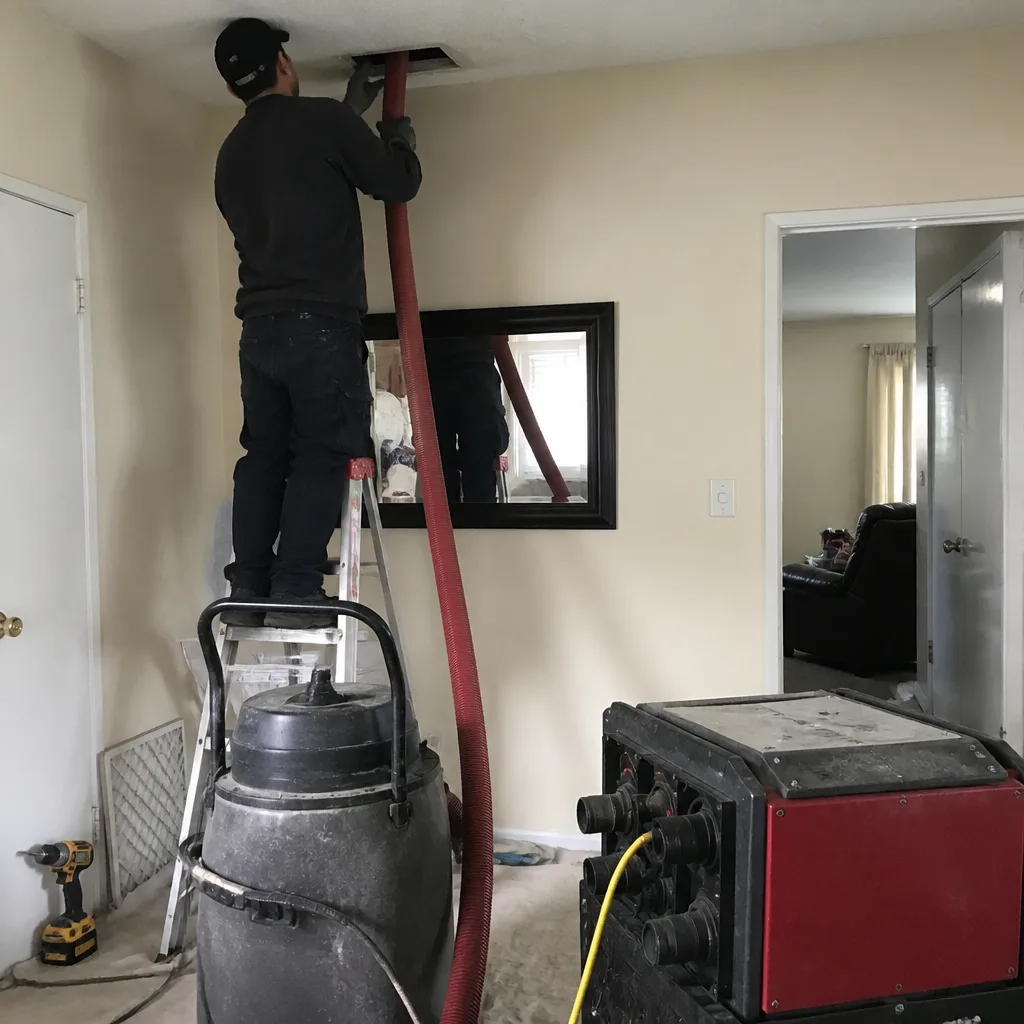 Before
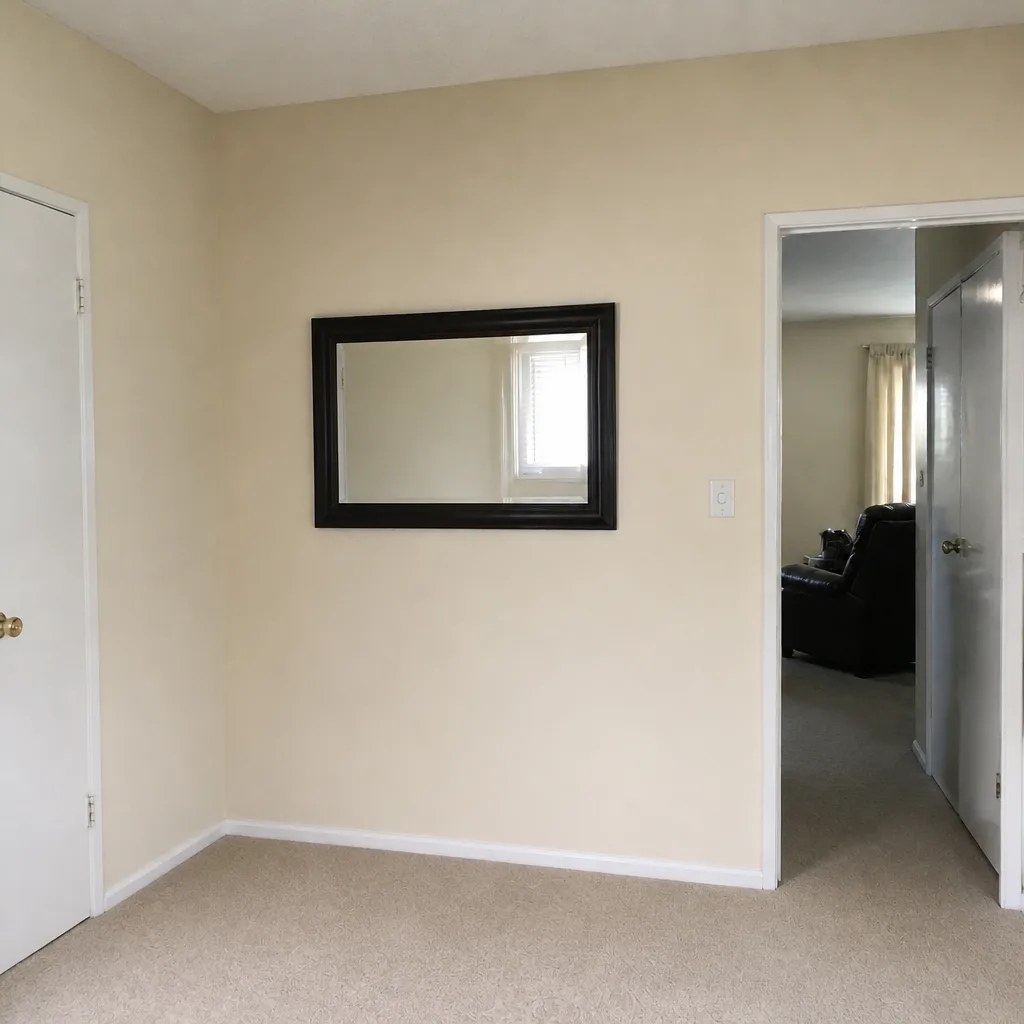 After
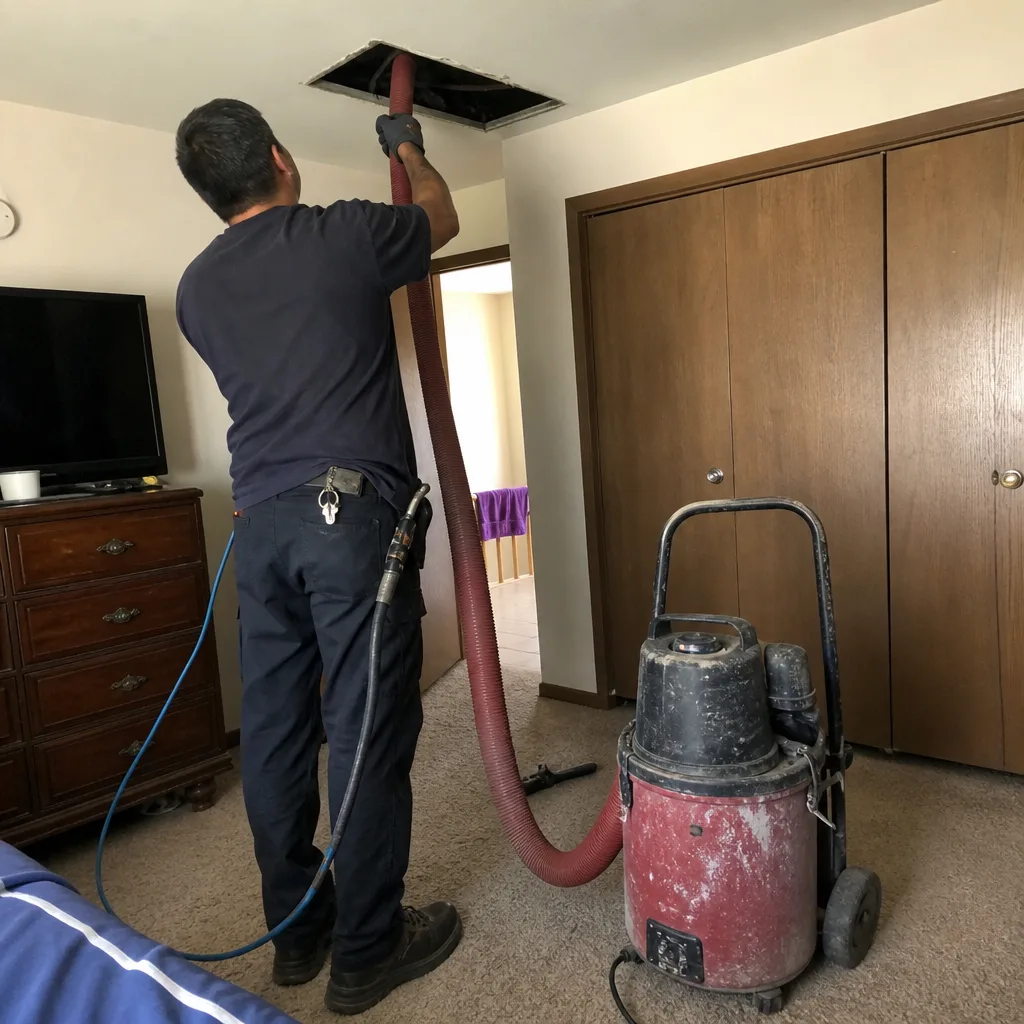 Before
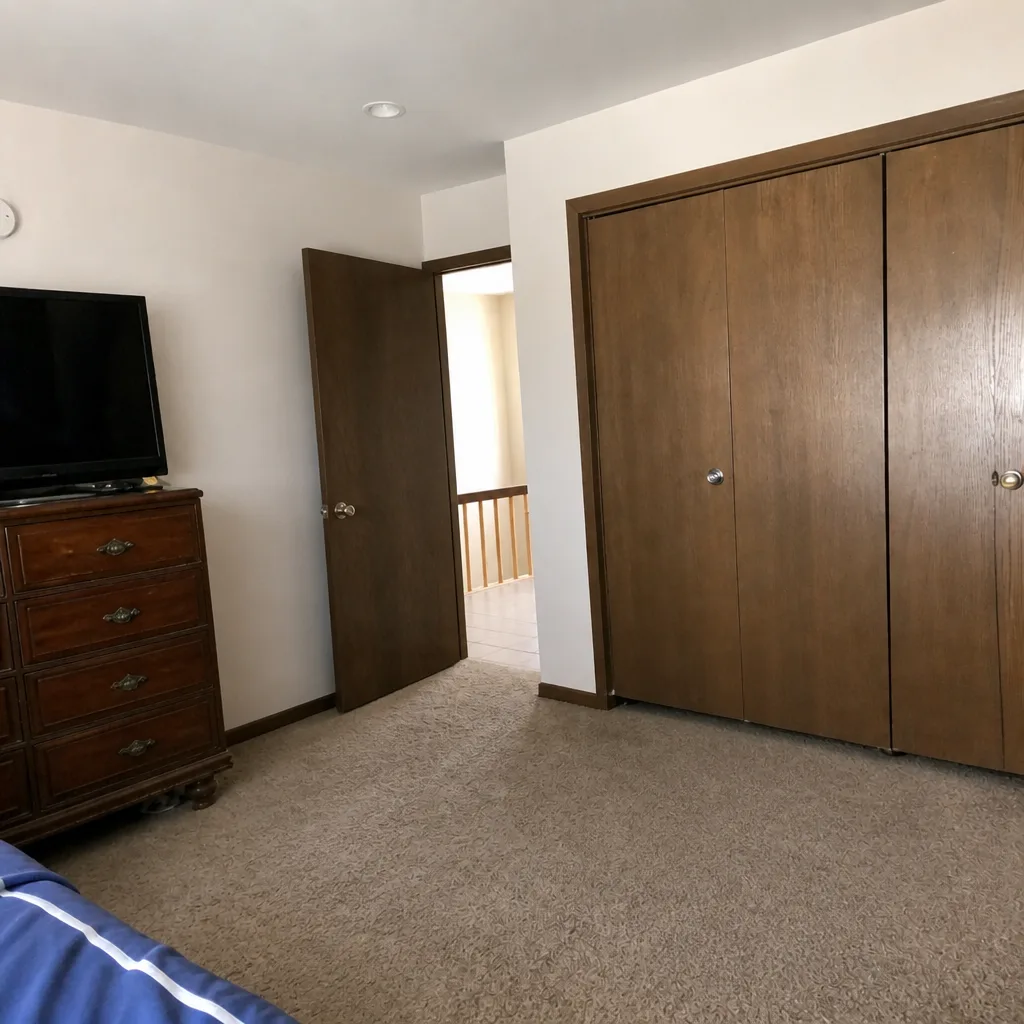 After
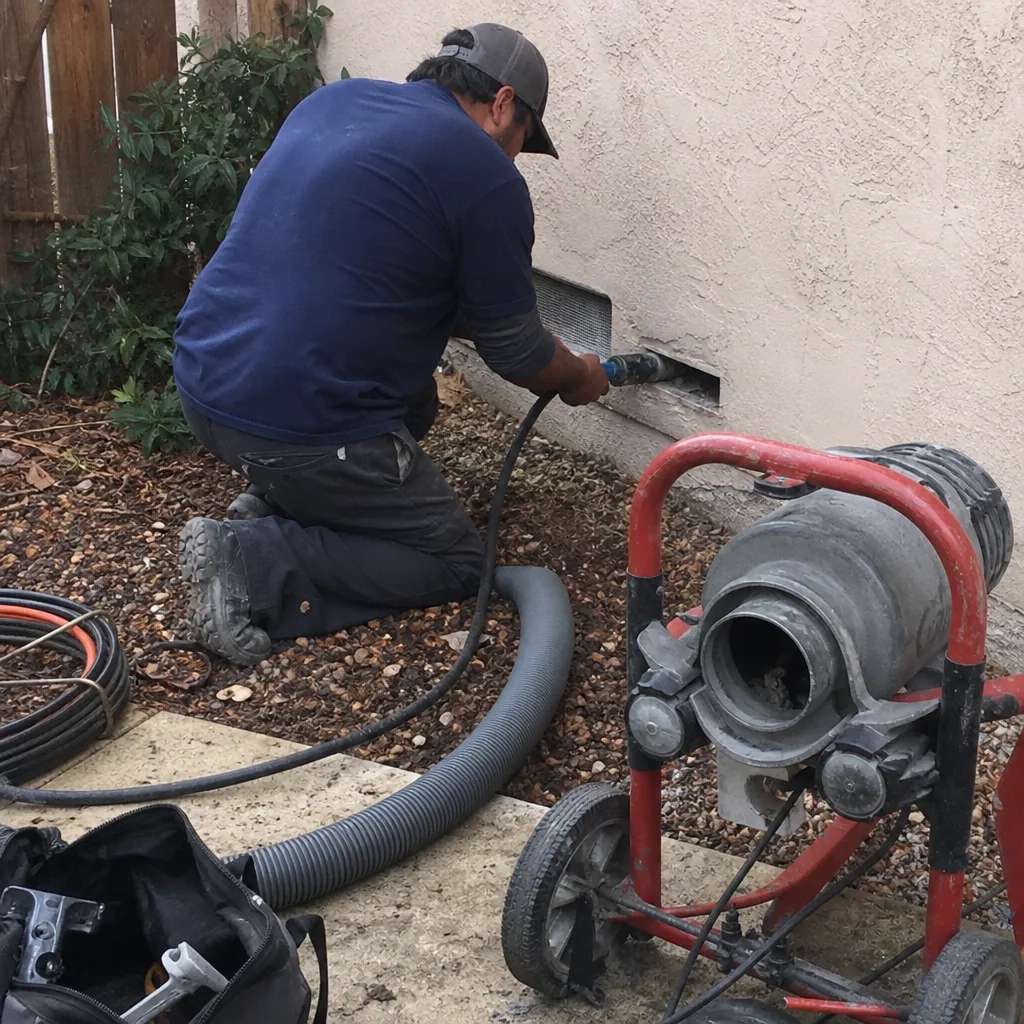 Before
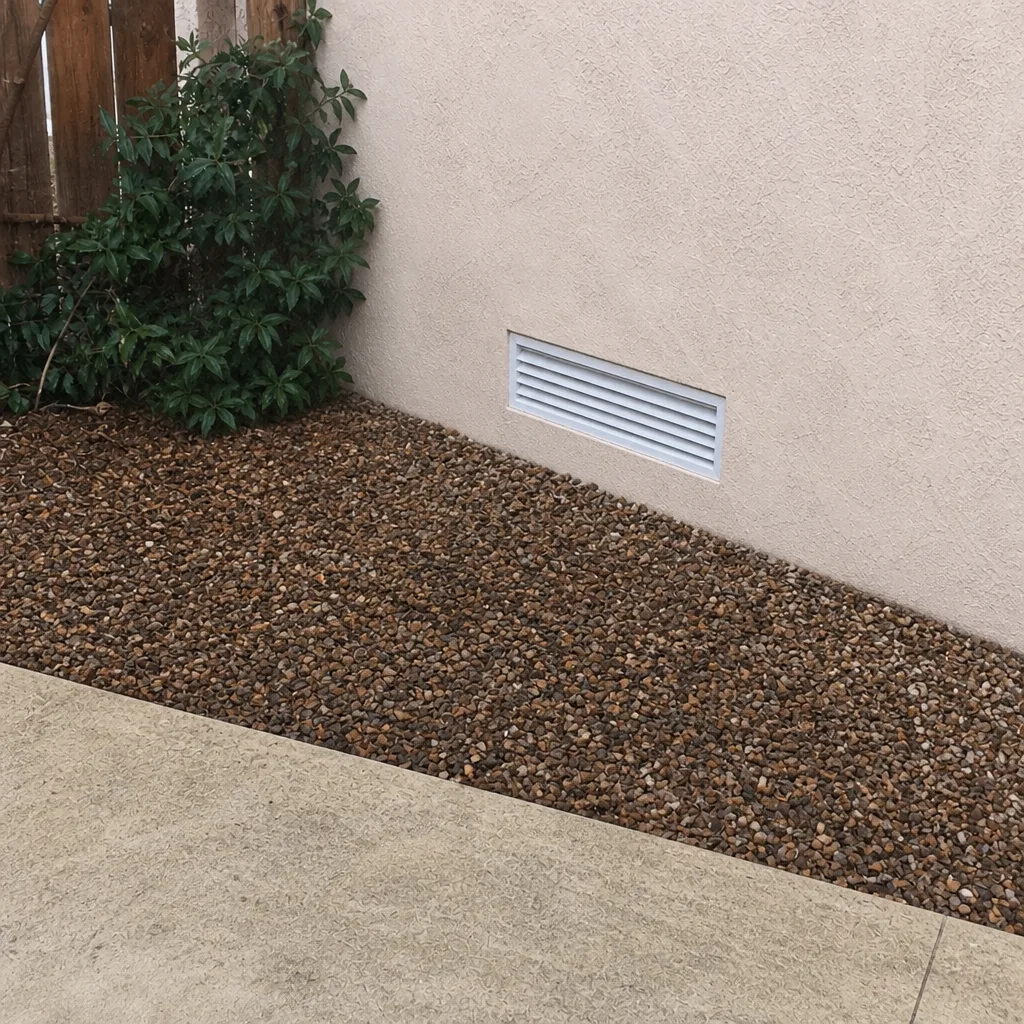 After
When to Call a Professional
Duct cleaning isn’t a service you need on a fixed calendar. It’s a response to conditions. Call a professional when you see visible dust buildup around the supply registers just after the system runs, when a renovation has just been completed and fine drywall dust has been pulled through the returns, when the home has had water intrusion or pest activity in the ductwork, or when a family member with allergies or asthma has worsening symptoms that track with system use. Call also when the system is older and has never been professionally cleaned, or when you can’t remember when the dryer vent was last cleared. Duct Cleaning Antioch offers free estimates in Antioch, and we answer 24/7. Call (877) 212-3243 to schedule a walkthrough and an honest scope of work.
Frequently Asked Questions
Typical whole-system cleaning in Antioch runs roughly in the range you’d expect for a single-family home, priced per system rather than per vent, with the final number set by a written estimate after the technician inspects the layout, the duct material, and the access points. Any company that quotes a firm number over the phone without seeing the system is guessing. Call (877) 212-3243 for an exact quote. Estimates are free.
Because they’re quoting a different job. A low quote usually reflects a portable vacuum setup without brush agitation, without HEPA extraction, and without negative-air containment. A properly equipped job uses brush agitation, a HEPA-rated extraction machine, and filtration that holds the work area under control. When you compare quotes, ask what machine is coming and whether the price is per system or per vent.
Ask for before-and-after photos of your own ducts, taken through the register openings. Any company using inspection cameras can produce them. Ask also for a post-cleaning airflow reading if the technician is using pressure gauges. If neither is offered at the end of the visit, that’s a red flag about how the work was performed.
Most homes don’t need it on a schedule. Cleaning is triggered by conditions: recent renovation, visible dust at the registers, pest activity in the system, water intrusion, or allergy symptoms that track with system use. Homes with pets, heavy dust exposure, or older systems may need it more often than homes that are rarely occupied. A professional walkthrough will tell you whether your system needs attention now.
We do both. Air duct repair is a distinct service, and it closes the gap that a clean-only company leaves behind. If the cleaning reveals a broken joint, a crushed flex run, or a sagging section, we can address it in the same visit rather than sending you to a separate HVAC contractor. That’s part of what makes the cleaning durable.
Professional-grade systems from brands like Rotobrush for brush agitation, Nikro for HEPA extraction, and Abatement Technologies for negative-air filtration. Our technicians have up to 8 years of experience and use professional-grade Rotobrush and Nikro equipment on every job, with Abatement Technologies air filtration integrated into the process. We’re also familiar with Honeywell and Aprilaire product lines for post-cleaning air quality upgrades, and with Guardsman dryer vent kits for the vent side.
The Bottom Line
Duct cleaning has no consumer brand hierarchy to lean on. The closest thing to one is the equipment a company runs, and that means your job as a buyer is to ask about the tools. Truck-mount or portable. Brush agitation or vacuum only. HEPA filtration or a coarse filter. Negative-air containment or an open shop vac. Each of those answers tells you something concrete about the job ahead of you. Whole-system pricing, inspection first, before-and-after documentation, and repair capability in the same visit complete the picture. That’s the standard to hold any company to, in Antioch or anywhere else. If you want a second opinion from a crew that runs Rotobrush and Nikro systems, call (877) 212-3243. We answer 24/7. Fast dispatch from 7am to 7pm, Sunday through Friday. Estimates are free.
Written by the team at Duct Cleaning Antioch.